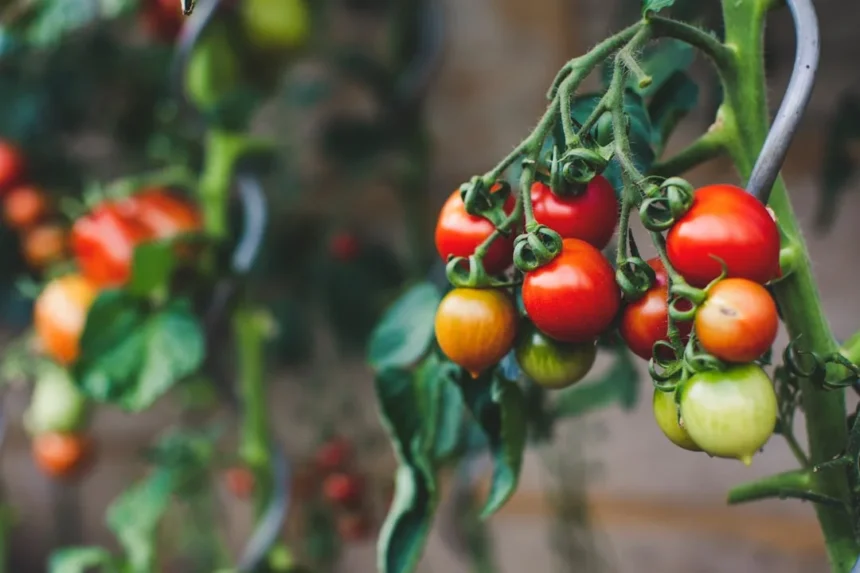
How to grow tomatoes starts with understanding that success depends on three fundamentals: sunlight, shelter, and soil. Most gardeners fail not because they lack patience but because they skip the groundwork—literally. A tomato plant thrives when planted in a sunny spot sheltered from wind, with well-draining, fertile soil amended with organic compost. Get these three elements right, and you’re already ahead of 80 percent of home growers.
Key Takeaways
- Plant tomatoes in full sun (6 to 8 hours daily minimum) in soil sheltered from wind
- Space determinate varieties 24 inches apart; indeterminate varieties 36 inches apart to prevent crowding
- Use granular balanced fertilizer (10-10-10 or 5-5-5) at planting, then switch to liquid feed when flowers appear
- Stake, cage, or trellis plants before they grow tall to avoid root disturbance
- Water with room-temperature water once or twice weekly in summer; cold water stresses plants and yellows leaves
- Pinch out suckers on indeterminate varieties while small to direct energy toward fruit
- Harvest in the morning when temperatures are cooler to preserve flavor and texture
Planting Tomatoes: Foundation for Success
The planting phase determines whether your tomatoes thrive or merely survive. Choose a location that receives at least 6 to 8 hours of direct sunlight daily—ideally 8 or more for mature plants. Wind exposure weakens stems and damages foliage, so shelter matters as much as sun. Prepare the planting hole and work a granular balanced fertilizer such as 10-10-10 or 5-5-5 into the surrounding soil. Pay special attention to phosphorus, which is essential for root establishment. Many growers add crushed eggshells for extra calcium.
When transplanting, set the plant so the first leaves sit just above the soil’s surface. This positioning allows the buried stem to form new roots, strengthening the plant. If you’re hardening off seedlings—a critical step most beginners skip—place them outside for just 1 to 2 hours in a bright, sheltered spot protected from direct sunlight. Increase exposure by about 1 hour per day over roughly two weeks. Water seedlings thoroughly on planting day to keep the soil ball intact.
Spacing determines airflow and disease risk. Determinate tomatoes (bush varieties) need at least 24 inches between plants, while indeterminate varieties (vining types) require about 36 inches. Crowding reduces airflow and growth, creating an environment where fungal diseases thrive. Install stakes, cages, or trellises before plants grow tall—ideally at planting time—so you avoid disturbing roots later.


Watering and Feeding: The Two-Step Rhythm
Cold water stresses tomato plants and causes leaves to yellow, darken, or become deformed. Always use room-temperature water. In summer, water once or twice weekly after the topsoil dries slightly. Hot weather demands more frequent watering, but never let soil dry out completely. Water the soil around plants rather than overhead; keeping foliage dry reduces disease pressure.
Fertilizing follows a three-step schedule. At planting, apply granular balanced fertilizer. Once the first flowers appear, switch to liquid fertilizer and apply it at least once weekly. Increase frequency during fruiting if the product label recommends it. This shift from granular to liquid reflects the plant’s changing needs—early growth demands balanced nutrition, but flowering and fruiting demand more frequent feeding.



Soil pH also affects nutrient uptake. Tomato plants absorb the most nutrients when soil pH sits between 6.2 and 6.8. Mulch with 2 to 3 inches of straw or untreated grass clippings to retain moisture and suppress weeds. Avoid overhead watering and practice crop rotation to reduce soil-borne disease risk.
Pruning and Support: Directing Energy to Fruit
Indeterminate varieties (the tall, vining types) produce suckers—side shoots that divert energy from fruit into foliage. Pinch out suckers while they’re small. Some growers remove every side shoot, while others leave one to develop as a backup branch. On very young plants, remove early flowers so energy goes into growth rather than premature fruiting. This counterintuitive step pays dividends: a stronger plant produces more fruit later.
Support matters more than many gardeners realize. Tall varieties should be supported with bamboo canes, and side shoots should be pinched out to focus energy on fruit. Staking, caging, or trellising prevents branches from breaking under fruit weight and improves air circulation. Install support structures early—before plants become too tall—to avoid damaging roots.
Harvesting: Timing for Maximum Flavor
Harvest in the morning when temperatures are cooler. Cooler morning conditions help preserve the tomato’s texture and freshness, especially if you’re growing for flavor. Once plants are established, avoid overwatering. Let the soil dry out slightly between thorough waterings; this encourages better fruit production rather than excess leafy growth and improves flavor.



How much space do tomato plants need?
Determinate varieties need at least 24 inches between plants, while indeterminate varieties require about 36 inches. Crowding reduces airflow, which promotes disease and stunts growth.
What’s the difference between determinate and indeterminate tomatoes?
Determinate tomatoes are compact bush varieties that grow to a fixed height and produce fruit all at once, making them ideal for canning. Indeterminate tomatoes are vining types that grow continuously and produce fruit throughout the season, requiring more pruning and support.
Can I grow tomatoes in containers?
Yes. Use a container 18 to 24 inches in diameter with potting mix. Container growing works well for determinate varieties and allows you to control soil quality, but containers dry faster than ground beds, so monitor watering closely.
Growing tomatoes successfully isn’t complicated—it’s about respecting the plant’s needs. Sun, shelter, fertile soil, consistent watering with room-temperature water, timely feeding, strategic pruning, and proper support create the conditions for abundant, flavorful fruit. Start with these fundamentals, and you’ll harvest tomatoes that taste nothing like the pale supermarket versions. The difference between a mediocre crop and an exceptional one often comes down to one overlooked detail. Find yours, and next season will be your best.
Where to Buy
$71 at Amazon US | $9.99 at Amazon US | $27.54 at Amazon US
Edited by the All Things Geek team.
Source: Tom's Guide