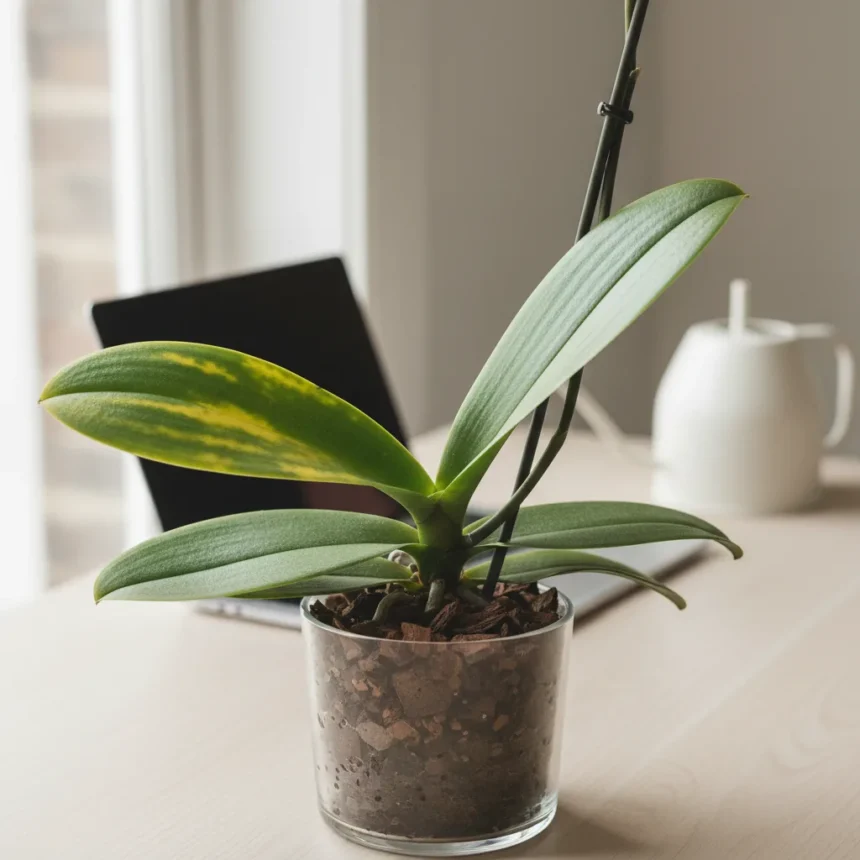
Orchid leaves turning yellow is one of the most common complaints from plant owners, yet it is also one of the easiest problems to solve. Unlike mysterious plant diseases, yellowing orchid leaves almost always point to a fixable care mistake. The good news: once you identify what is going wrong, your orchid can recover and return to healthy green growth.
Key Takeaways
- Yellow orchid leaves usually signal overwatering or poor drainage, not disease.
- Water only when the potting mix is dry about 1 inch (2.5 cm) deep.
- Orchids need chunky bark-based soil, not standard houseplant potting mix.
- Avoid watering directly onto leaves; water the roots underneath instead.
- Wait a few days after fertilizing before watering to prevent nutrient loss.
Overwatering Is the #1 Culprit Behind Orchid Leaves Turning Yellow
Most yellowing orchid leaves result from one mistake: too much water. Orchids are not thirsty plants. They evolved in tropical forests where they cling to tree bark and receive water mainly from rainfall and humidity, not from constant soil moisture. When grown indoors in pots, they still prefer drying out between waterings. Overwatering suffocates the roots, leading to root rot, which prevents the plant from absorbing nutrients and causes leaves to yellow and drop.
The fix is straightforward: check the potting mix before watering. Stick your finger about 1 inch (2.5 cm) into the pot. If the mix feels dry, water it. If it still feels moist, wait another day or two. This simple test prevents the guesswork that leads to overwatering. For those who prefer more precision, a soil moisture meter like the XLUX Soil Moisture Meter (priced at $12 on Amazon) removes the guesswork entirely.
One critical watering rule: never pour water directly onto the plant or its leaves. Instead, water the roots underneath the foliage. This prevents leaf rot and ensures water reaches where it is needed. After you water, allow excess moisture to drain completely from the pot. Standing water in a saucer will wick back up into the soil and cause the same overwatering problems you are trying to avoid.


The Wrong Potting Medium Traps Moisture and Damages Roots
Even if you water correctly, the wrong soil can still cause yellowing leaves. Orchids do not belong in standard houseplant potting mix, which holds too much moisture and compacts over time. Instead, orchids require a chunky bark-based mix that mimics their natural growing environment on tree bark. This specialized medium allows air to reach the roots and water to drain quickly, preventing the waterlogged conditions that trigger rot and yellowing.
If your orchid has been in regular potting soil and is showing yellow leaves, repotting into a proper orchid bark mix may be necessary. When you repot, inspect the roots carefully. Healthy roots are firm and light-colored. Mushy, dark roots indicate rot and should be trimmed away with clean scissors before repotting into fresh bark medium. This step is critical—leaving rotted roots in place will not solve the yellowing problem.



Fertilizer Timing and Other Care Factors
Yellowing can also occur when orchids are stressed by incorrect overall care. One often-overlooked detail is fertilizer timing. After you fertilize an orchid, wait a few days before watering. This prevents nutrients from washing away in runoff, allowing the plant to absorb what it needs. Fertilizing without this pause wastes both nutrients and your effort.
Beyond watering and soil, consider the orchid’s light and humidity. Orchids thrive in bright, indirect light—not dark corners. Poor light weakens the plant and makes it more susceptible to stress and yellowing. Humidity also matters; orchids prefer air moisture around 50-70%. If your home is very dry, mist the leaves occasionally or place the pot on a humidity tray to support overall plant health.
How long does it take for an orchid to recover from yellow leaves?
Recovery depends on how much damage has occurred. If you catch the problem early and adjust watering immediately, new growth should appear green within 2-4 weeks. However, leaves that are already yellow will not turn green again—they will eventually drop. Focus on preventing further yellowing by maintaining correct care going forward.
Can yellow orchid leaves mean the plant is dying?
Not necessarily. Yellow leaves signal a care problem, but orchids are resilient. Even plants with significant yellowing can recover once you fix the underlying issue. The key is acting quickly: correct the watering, repot into proper bark medium if needed, and give the plant time to stabilize.



Should I remove yellow orchid leaves?
You can remove them for appearance, but it is not required. Yellow leaves will eventually fall off on their own as the plant redirects energy to new growth. If you prefer a cleaner look, gently remove them by hand or with clean scissors once they are mostly yellow.
Yellow orchid leaves are frustrating, but they are also a clear signal that something is fixable. Check your watering habits first—that solves the problem in most cases. Verify your potting medium is chunky bark, not standard soil. Wait a few days after fertilizing before watering again. These three adjustments address the vast majority of yellowing orchid problems and set your plant on the path back to health.
Where to Buy
Edited by the All Things Geek team.
Source: Tom's Guide