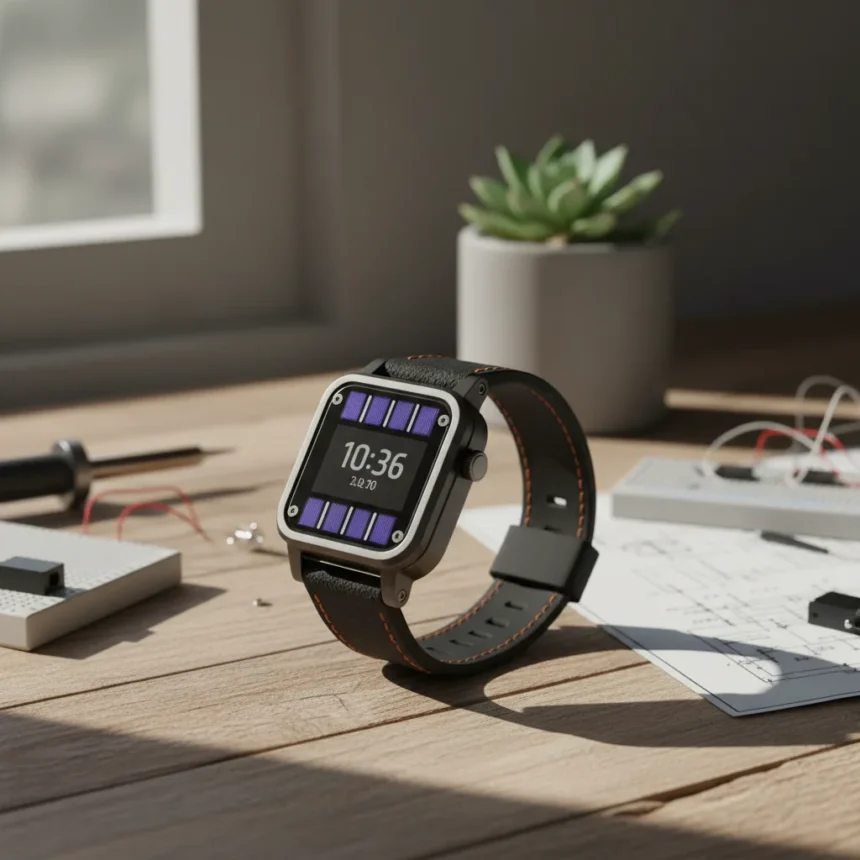
A solar-powered smartwatch battery life of 10 months on a single charge sounds like science fiction, yet one Pebble-style rival is claiming exactly that. Unlike mainstream smartwatches that demand daily charging, this device harnesses solar energy to stretch battery endurance to nearly a year, positioning itself as a throwback to Pebble’s legendary longevity while embracing a modern twist: you have to build it yourself.
Key Takeaways
- Solar-powered smartwatch battery life reaches 10 months on a single charge with solar assistance.
- The device is a self-build project, not a ready-made retail smartwatch.
- Positioned as a Pebble rival, targeting users who value durability over convenience.
- Solar charging eliminates the need for frequent charging cycles common in conventional smartwatches.
- The DIY nature appeals to electronics enthusiasts and open-hardware advocates.
What Makes This Solar-Powered Smartwatch Battery Life Stand Out
The 10-month battery claim separates this device from every mainstream smartwatch on the market. Apple Watch, Wear OS devices, and even Fitbit trackers typically manage three to seven days between charges. This solar-powered smartwatch battery life achieves a fundamentally different category of endurance by combining efficient low-power display technology with supplementary solar panels integrated into the watch face. The solar cells trickle-charge the battery throughout the day, dramatically reducing reliance on traditional plug-in charging.
This approach echoes Pebble’s original appeal, which made its name on multi-week battery life in an era when smartwatches were becoming increasingly power-hungry. Pebble abandoned the market in 2016, leaving a void for users who prioritized practicality over feature density. A solar-powered smartwatch battery life measured in months rather than days directly addresses that nostalgia, offering a philosophy that battery longevity matters more than constant connectivity or high-refresh displays.
The Self-Build Requirement Changes Everything
Unlike conventional smartwatches you unbox and wear immediately, this device demands assembly. The self-build nature means buyers receive components and instructions, then construct the watch themselves. This is not a flaw—it is the defining feature. By shifting assembly to the end user, the manufacturer reduces costs, appeals to the maker community, and sidestep supply chain bottlenecks that plague finished-goods smartwatch launches.


The trade-off is obvious: this is not for everyone. Mainstream consumers expect plug-and-play devices. But for electronics enthusiasts, hobbyists, and anyone who has assembled a PC or tinkered with Arduino boards, a DIY smartwatch represents genuine appeal. You understand the internals, can repair components, and modify the device to suit your needs. That level of control is virtually extinct in consumer electronics.
Solar-Powered Smartwatch Battery Life vs. Conventional Alternatives
Comparing this solar-powered smartwatch battery life to conventional rivals exposes a philosophical divide. A typical modern smartwatch prioritizes features: always-on displays, GPS, heart-rate sensors, music streaming, contactless payments. These capabilities demand constant power. The trade-off is simple: more features, less battery. A Wear OS watch might deliver 1-2 days; a premium model might stretch to 5-7 days with aggressive power management.



This solar-powered device makes the opposite bet. It sacrifices feature density for endurance. No always-on display draining power continuously. No constant GPS tracking. Instead, a low-power screen that updates sparingly, paired with solar harvesting that keeps the battery topped up during daylight hours. For users who view a smartwatch as a notification device and activity tracker rather than a wrist-mounted smartphone, this trade-off makes sense. The 10-month battery life means you might charge it once per season, not once per week.
Who Should Actually Consider This Watch
This solar-powered smartwatch battery life appeals to a specific audience. Outdoor enthusiasts benefit immediately—hikers, campers, and travelers who spend hours in sunlight gain a device that charges itself during the day. Remote workers and anyone who spends significant time outdoors will see extended periods between manual charging. Tech-minded users who enjoy building electronics and understanding their devices will find the DIY aspect rewarding rather than burdensome.
Conversely, if you demand always-on displays, music storage, offline maps, or seamless app integration, this is not your watch. If you charge your current smartwatch twice weekly and call it a feature, this device targets the opposite mentality. The solar-powered smartwatch battery life is a feature only if you actually want to minimize charging.
Does a DIY Smartwatch Make Practical Sense
Assembly complexity raises a legitimate question: is building a smartwatch worth the hassle? For casual users, probably not. For the target demographic—makers, open-hardware advocates, and battery-obsessed users—absolutely. The DIY approach also means you are not locked into a proprietary ecosystem. You own the hardware, understand the code, and can modify or repair it without manufacturer approval. That autonomy has value beyond mere battery life.



The Pebble comparison is apt but incomplete. Pebble was a finished product that happened to have excellent battery life. This device is an open-hardware project that prioritizes battery life above all else. The philosophies align, but the execution differs. One was a consumer product; the other is a maker project that happens to be available to anyone willing to assemble it.
Can Solar Charging Actually Work in Real Life
Solar harvesting sounds promising in theory but falters in practice for many devices. Weak indoor light provides minimal charging. Cloudy days reduce output dramatically. Winter months in northern latitudes offer insufficient sunlight. This solar-powered smartwatch battery life depends on realistic solar conditions, and the 10-month claim presumably assumes average daylight exposure, not worst-case scenarios.
The key advantage is supplementary charging rather than primary charging. Even modest solar input reduces battery drain enough to extend intervals between plug-in charges from days to weeks or months. You will still charge it eventually, but far less frequently than conventional smartwatches. That is the genuine win here.
Is this smartwatch worth building yourself?
If you enjoy electronics projects and value battery life over features, yes. If you want a smartwatch you buy, unbox, and wear without any assembly, no. The solar-powered smartwatch battery life is real, but it comes with the friction of self-assembly and the reality that solar charging works best with regular outdoor exposure.
How does 10-month battery life compare to Pebble smartwatches?
Pebble watches offered 7-10 days of battery life, which was exceptional for its era. This solar-powered device claims 10 months—roughly 40 times longer. The comparison is not entirely fair since Pebble was a finished product while this is a DIY project, but the philosophy is identical: practicality over feature overload.
What happens to the battery in winter or cloudy climates?
Solar charging output drops significantly in low-light conditions. Winter months or consistently cloudy regions will see reduced solar input, meaning longer intervals between manual charges but not the full 10-month span. Real-world battery life depends heavily on your geographic location and seasonal sunlight exposure.
This solar-powered smartwatch battery life represents a genuine alternative to mainstream devices, but only for users willing to build their own hardware and accept that battery endurance comes at the cost of feature density. For the right person—the maker, the outdoors enthusiast, the battery purist—it is a compelling choice. For everyone else, conventional smartwatches remain the practical option.
Where to Buy
64 Amazon customer reviews | No price information
Edited by the All Things Geek team.
Source: T3