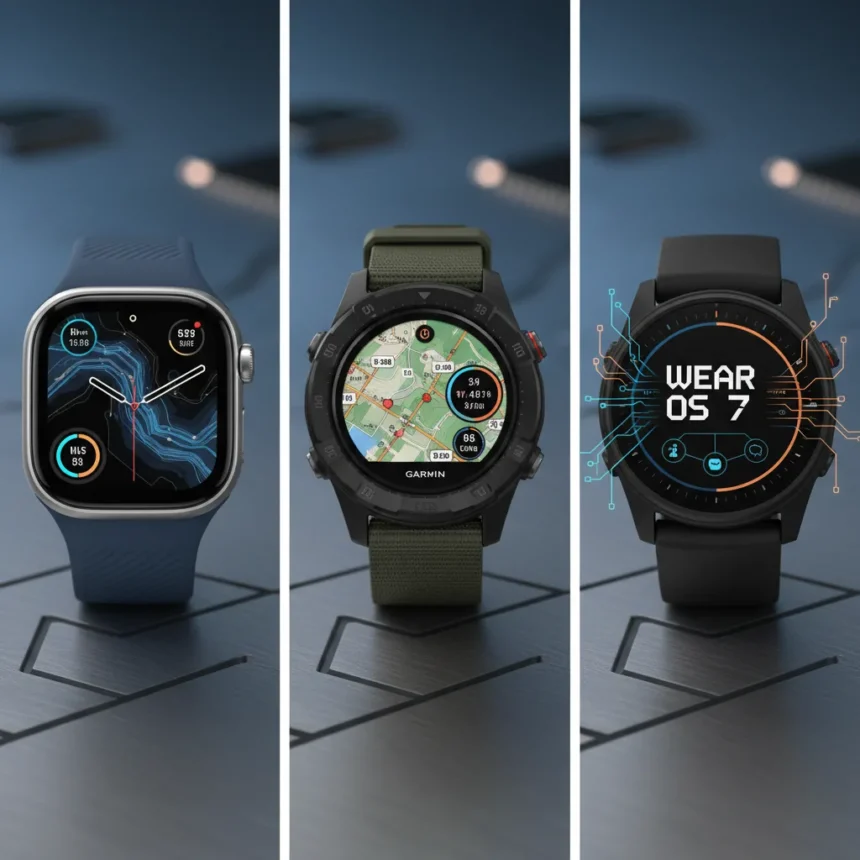
Wear OS 7 upgrades are essential if Google wants to keep Pixel Watches and Samsung Galaxy Watches relevant in a market dominated by Apple Watch and high-performance Garmin devices. As Google I/O approaches, expectations are building around what the next major platform update will deliver. The reality is stark: Wear OS has fallen behind on features, performance, and user experience that matter most to smartwatch buyers.
Key Takeaways
- Wear OS 7 is expected to arrive around Google I/O, addressing competitive gaps against Apple and Garmin
- Google Pixel Watches and Samsung Galaxy Watches need platform-level improvements to remain viable
- The smartwatch market is increasingly segmented between fitness-focused devices and lifestyle wearables
- Wear OS must close the gap on battery life, health features, and ecosystem integration
- User expectations for the next version are higher than ever, with specific feature demands already circulating
Why Wear OS 7 upgrades matter right now
Google I/O is the company’s primary stage for announcing major platform shifts, and Wear OS 7 is expected to be a centerpiece of that conversation. The timing is critical because the smartwatch market has evolved dramatically. Apple Watch dominates the premium lifestyle segment with seamless iPhone integration and health monitoring that keeps users locked into the ecosystem. Garmin owns the fitness space with specialized sensors, battery endurance, and training tools that serious athletes demand. Wear OS sits uncomfortably between these two worlds, excelling at neither.
For Pixel Watch users and the broader Wear OS community, this represents a moment of reckoning. The platform has made incremental improvements, but incremental is not enough when competitors are redefining what smartwatches can do. Wear OS 7 upgrades need to address fundamental gaps that have frustrated users for years, not just add polish to existing features.
The competitive pressure from Apple and Garmin
Apple Watch’s advantage extends far beyond hardware. The ecosystem integration with iPhone, iPad, and Mac creates a gravitational pull that keeps users loyal even when individual features seem incremental. Garmin, meanwhile, has built an empire on the premise that a smartwatch should prioritize fitness data, battery life, and reliability over flashy AI features or constant notifications. These are not trivial competitors—they represent two completely different philosophies about what a smartwatch should be.


Wear OS 7 upgrades must acknowledge this reality and choose a direction rather than trying to be everything to everyone. Google has the software expertise to compete on AI and integration, but it needs to commit to that vision fully. Samsung Galaxy Watches running Wear OS have proven the platform can deliver competitive experiences, yet even those devices feel constrained by platform limitations that only Google can fix.
What users actually want from Wear OS 7 upgrades
The conversation around Wear OS 7 upgrades has coalesced around specific pain points. Battery life remains the most consistent complaint—users want smartwatches that last multiple days without charging, not 24 to 36 hours. Health monitoring needs depth comparable to Apple Watch, including advanced metrics that appeal to health-conscious buyers. Performance and responsiveness matter too; a sluggish interface undermines the entire experience, especially when competitors deliver snappy interactions consistently.



Beyond hardware limitations, Wear OS 7 upgrades should address fragmentation. The platform supports dozens of device manufacturers, each with different hardware capabilities, leading to inconsistent experiences. A unified approach to feature rollouts and a clear baseline for what Wear OS 7 devices can do would strengthen the entire ecosystem. Users of Google Pixel Watches and Samsung Galaxy Watches deserve confidence that their devices will receive the same level of support and feature parity.
The stakes for Google’s smartwatch future
If Wear OS 7 upgrades fail to meaningfully close the gap with Apple Watch and Garmin, Google risks further erosion of market share in a category where it once had real momentum. The Pixel Watch line has potential, but potential only matters if the software foundation supports ambitious hardware. Samsung’s commitment to Wear OS depends partly on seeing the platform evolve in ways that justify the investment.
This is not about matching Apple Watch feature-for-feature or becoming Garmin. It is about defining what Wear OS does better than anyone else and executing that vision flawlessly. Whether that means prioritizing AI integration, ecosystem connectivity, or fitness-specific tools, Wear OS 7 upgrades need to send a clear signal that Google is serious about the category.
Frequently Asked Questions
When is Wear OS 7 expected to launch?
Wear OS 7 is expected around Google I/O, though Google has not confirmed an exact release date. The timing suggests an announcement at the developer conference with rollout potentially following in the months after.



Will all Wear OS devices get Wear OS 7 upgrades?
Historically, Wear OS updates have rolled out gradually across different manufacturers and devices. Pixel Watch and Samsung Galaxy Watch models typically receive updates first, with broader availability following. Specific device eligibility has not been announced.
What makes Garmin watches so competitive against Wear OS?
Garmin watches excel in battery longevity, specialized fitness metrics, and reliability for endurance athletes. Wear OS 7 upgrades would need to address battery performance and health monitoring depth to compete in the fitness segment where Garmin dominates.
Google has a narrow window to demonstrate that Wear OS 7 upgrades represent a genuine leap forward. The smartwatch market is not forgiving of incremental improvements, and users have proven willing to switch platforms if another option serves their needs better. The next version of Wear OS must be bold enough to shift the conversation.
Where to Buy
Google Pixel Watch 4 | Samsung Galaxy Watch 8
Edited by the All Things Geek team.
Source: TechRadar