Philips smart lighting brands have multiplied. Signify, the company that spun off from Royal Philips in 2016 to manage all lighting operations, no longer relies solely on the premium Philips Hue brand to dominate the smart lighting market. Today, Philips smart lighting encompasses multiple tiers and ecosystems, fundamentally changing how consumers approach smart home lighting purchases and integrations.
Key Takeaways
- Signify operates multiple Philips lighting brands: premium Hue, budget WiZ, and entry-level Philips Smart Lighting.
- WiZ became Matter-compatible before Hue, offering faster third-party device integration.
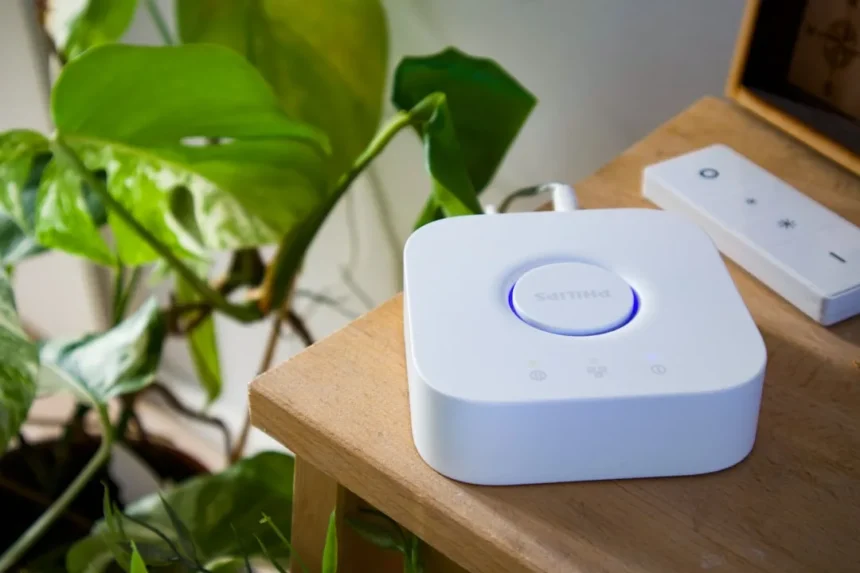
- Hue Bridge Pro (2025/2026 launch) requires full migration; older bridges stop controlling lights afterward.
- WiZ uses SpaceSense motion detection without requiring separate sensors or batteries.
- WiZ works natively with Apple HomeKit, Google Home, Amazon Alexa, and Samsung SmartThings.
Why Signify Created Multiple Philips Smart Lighting Brands
Premium pricing locked out millions of potential smart home users. Hue’s ecosystem demanded significant upfront investment—bridge, bulbs, accessories—making entry barriers steep for budget-conscious households. Signify recognized this gap and responded by fragmenting the Philips brand into distinct product lines rather than competing with Hue directly under the same name. Philips Smart Lighting targets users who want affordable smart bulbs without ecosystem lock-in, while WiZ positioned itself as the value alternative with surprising feature depth.
This strategy mirrors how Samsung operates Galaxy phones (premium S-series, mid-range A-series, budget F-series) or how Volkswagen owns Audi, Porsche, and Skoda. By maintaining separate brand identities, Signify avoids cannibalizing Hue’s premium positioning while capturing price-sensitive buyers who would otherwise choose non-Philips alternatives entirely. The result is a portfolio that serves entry-level users, mainstream adopters, and smart home enthusiasts simultaneously.
WiZ Beat Hue to Matter Compatibility
Matter adoption has become the defining differentiator in smart home ecosystems. WiZ achieved Matter compatibility before Philips Hue, giving the budget brand a genuine technical advantage. This meant WiZ users could mix and match third-party Matter-compatible devices—sensors, plugs, lights from other manufacturers—without depending exclusively on Philips products for basic smart home functions.


Hue Bridge Pro, announced during Signify’s largest product launch ever, finally brings Matter support to the premium brand. However, the bridge requires complete migration from older Hue Bridge models. Users cannot run both bridges simultaneously; the previous bridge stops controlling lights once the migration completes. This all-or-nothing approach contrasts sharply with WiZ’s gentler ecosystem entry, where users add devices incrementally without worrying about legacy hardware becoming obsolete overnight.
WiZ’s native compatibility with Apple HomeKit, Google Home, Amazon Alexa, and Samsung SmartThings means users escape Philips-only constraints entirely. A household running Google Home can integrate WiZ lights without needing a proprietary bridge, reducing complexity and cost compared to Hue’s traditional architecture.


What SpaceSense Changes About Motion Detection
WiZ incorporated SpaceSense, a Signify innovation that detects motion using Wi-Fi signals rather than dedicated infrared sensors. This eliminates the battery-powered motion sensor hardware that traditional smart lighting systems require, reducing maintenance and cost. Users get motion-triggered automation without purchasing and replacing sensor batteries annually—a seemingly small advantage that compounds over time in multi-room installations.
Hue motion sensors, by contrast, remain battery-dependent. While Hue offers superior sensor accuracy and customization through its app, WiZ’s approach removes friction for users prioritizing simplicity over granular control. SpaceSense represents a philosophical difference: Hue optimizes for precision, WiZ optimizes for accessibility.
The Hue Bridge Pro Migration Dilemma
Signify’s insistence on full migration to Hue Bridge Pro creates a genuine decision point for existing Hue users. Staying on older bridges means no Matter support, no new features, and eventual incompatibility as the ecosystem evolves. Migrating means discarding hardware that functions perfectly today but becomes dormant tomorrow. This binary choice frustrates users who prefer gradual hardware upgrades and multi-hub resilience.
WiZ avoids this problem by design. Its distributed architecture means adding new devices doesn’t require replacing central infrastructure. A household can integrate WiZ lights, plugs, and sensors piecemeal without worrying about bridge obsolescence or forced migrations.


Is Philips Smart Lighting Right for Your Home?
Budget buyers should consider Philips Smart Lighting or WiZ first. Both offer Matter compatibility, broad platform support, and significantly lower entry costs than Hue. Existing Hue users benefit from the ecosystem’s maturity, app sophistication, and sensor ecosystem—but only if they accept the Bridge Pro migration or remain on older hardware.
Mixed-brand households now work reliably thanks to Matter. A home running Google Home can integrate WiZ lights, Hue lights, and third-party sensors without ecosystem conflicts. This flexibility didn’t exist two years ago, making this an ideal moment for smart home newcomers to avoid Hue’s premium pricing entirely.
Does WiZ work with Apple HomeKit?
Yes, WiZ lights and plugs work natively with Apple HomeKit without requiring a separate bridge. This direct compatibility makes WiZ simpler for HomeKit-first households than Hue, which traditionally required a Hue Bridge for HomeKit integration.
What happens to my old Hue Bridge when I upgrade to Bridge Pro?
The old Hue Bridge stops controlling lights once migration to Bridge Pro completes. Signify does not support simultaneous multi-hub operation, meaning you must choose between old and new infrastructure—you cannot run both in parallel.
Is Philips Smart Lighting cheaper than WiZ?
Pricing details for Philips Smart Lighting remain unclear from available information. Both brands position themselves as affordable alternatives to premium Hue, but exact pricing and availability vary by region and retailer. Check local retailers for current pricing in your area.
Signify’s expansion of Philips smart lighting brands reflects a maturing market where consumers demand choice, affordability, and interoperability. Hue remains the premium choice for users who prioritize ecosystem depth and sensor sophistication, but WiZ and Philips Smart Lighting prove that smart lighting no longer requires premium pricing or proprietary lock-in. The real winner is the consumer, who now selects lighting based on use case rather than brand monopoly.
Where to Buy
Edited by the All Things Geek team.
Source: T3