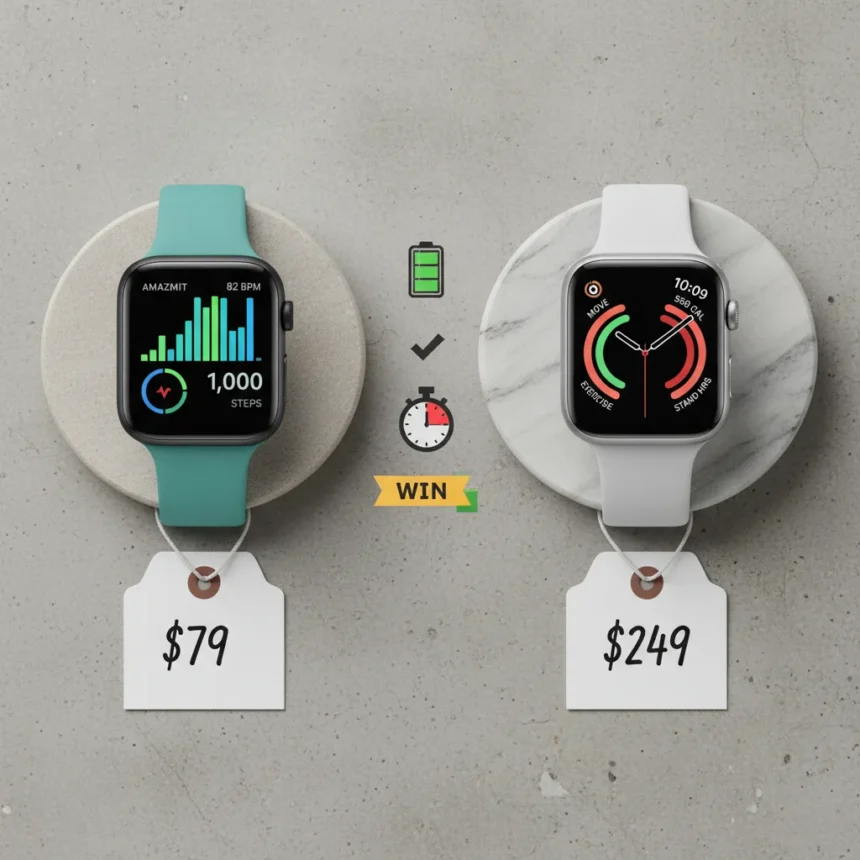
The Amazfit Bip 6 vs Apple Watch SE 3 debate cuts to the heart of what entry-level smartwatches should actually do. At $79, the Amazfit undercuts Apple’s SE 3 by $170, yet delivers features that challenge the premium narrative Apple has built around its watch ecosystem.
Key Takeaways
- Amazfit Bip 6 costs $79; Apple Watch SE 3 costs $249—a 3x price gap.
- Bip 6 battery lasts 14-45 days; Apple Watch SE 3 lasts roughly 18 hours.
- Bip 6 features AMOLED display, onboard GPS, and AI-powered health tracking.
- Apple Watch SE 3 offers superior build quality, vibrant OLED screen, and larger app ecosystem.
- Bip 6 ideal for casual fitness tracking; SE 3 better for power users and iOS integration.
Amazfit Bip 6 vs Apple Watch SE 3: The Battery Divide
Battery life is where the Amazfit Bip 6 vs Apple Watch SE 3 comparison becomes almost unfair. The Bip 6 delivers up to 14-45 days per charge depending on usage patterns, while the SE 3 manages roughly 18 hours. That means you’ll charge your Apple Watch almost daily while the Amazfit sits on your wrist for weeks. For travelers, gym-goers, and anyone who forgets to charge devices, this advantage alone justifies the lower price.
Apple’s choice to prioritize screen brightness and always-on functionality comes at a genuine cost. The SE 3’s OLED Retina display is vibrant and responsive, but it drains the battery faster than competitors. The Bip 6’s 1.97-inch AMOLED display is sunlight-readable and lighter, making it practical for extended wear without constant charging anxiety.
Build Quality and Display: Where Apple Justifies the Premium
The Amazfit Bip 6 vs Apple Watch SE 3 gap widens when you examine craftsmanship. Apple’s SE 3 feels like a premium device—solid aluminum casing, tight button response, and an ecosystem built for seamless iOS integration. The Bip 6 uses a polycarbonate body and liquid silicone strap that feels budget-friendly by comparison, though it is lighter and more comfortable for all-day wear.


On screens, the SE 3’s OLED panel is sharper and more colorful, but it has a glossy finish that washes out in direct sunlight. The Bip 6’s AMOLED is matte and readable outdoors, a practical advantage for outdoor athletes. Neither display is perfect—Apple prioritizes aesthetics, Amazfit prioritizes usability.
Features and Health Tracking: AI Meets Simplicity
The Amazfit Bip 6 includes onboard GPS, AI-powered features, water intake tracking, weight monitoring, and compatibility with smart scales and external heart rate monitors. These additions suggest Amazfit is targeting serious fitness enthusiasts on a budget. The Bip 6 also supports Bluetooth calling and works with both Android and iOS, making it genuinely cross-platform in a way Apple Watch never will be.



The SE 3 dominates in app ecosystem depth and iOS-exclusive features like Siri voice control and Apple Pay integration. If you live within Apple’s walled garden, the SE 3 is more powerful. But for casual fitness tracking—steps, heart rate, sleep, workouts—the Bip 6’s health metrics are reliable enough for most users, even if they lack medical-grade precision.
One caveat: the Bip 6 requires a Zepp Aura subscription for wellness reports and personalized recommendations. This adds an ongoing cost that Apple doesn’t impose, though the base watch functionality works without it.
Water Resistance and Durability
The Amazfit Bip 6 carries a 5 ATM water resistance rating, suitable for swimming and snorkeling. The Apple Watch SE 3 is waterproof to 50 meters, a higher standard. For most users, both are sufficient for daily water exposure, but Apple’s rating provides more margin for deep water activities. This is one of the few areas where the premium price reflects a tangible durability advantage.
Ecosystem and Software Setup
The Zepp app on the Bip 6 is simpler than watchOS on the SE 3, which some users will appreciate and others will find limiting. The Bip 6’s setup is more straightforward, and the app works identically on iOS and Android. The SE 3 requires an iPhone and integrates deeply with macOS, iCloud, and Apple’s Health app—a significant advantage if you own multiple Apple devices.



Should You Buy the Amazfit Bip 6 or Apple Watch SE 3?
The Amazfit Bip 6 is the smarter choice if you prioritize battery life, budget, and cross-platform compatibility. Wear it for weeks without charging, use it on Android or iOS, and track casual fitness without monthly subscriptions. The trade-off is build quality and a smaller app ecosystem.
The Apple Watch SE 3 is worth the $170 premium if you’re embedded in Apple’s ecosystem and want tight iOS integration, a premium feel, and access to exclusive features like Siri and Apple Pay. Battery life is the real cost—expect daily charging as the price of owning a smartwatch that doubles as a fashion statement.
Is the Amazfit Bip 6 compatible with iPhone?
Yes, the Bip 6 works with both iOS and Android via the Zepp app. You won’t get Apple Watch-level iOS integration, but fitness tracking, notifications, and basic smart features function on iPhone.
How long does the Apple Watch SE 3 battery last?
The SE 3 battery lasts roughly 18 hours on a full charge, requiring daily charging for most users. This is typical for Apple Watch models and reflects the trade-off between screen brightness and power consumption.
What is the water resistance difference between these watches?
The Bip 6 is rated 5 ATM (suitable for swimming), while the SE 3 is waterproof to 50 meters. Both handle daily water exposure, but the SE 3 offers a higher margin for deeper water activities.
The Amazfit Bip 6 vs Apple Watch SE 3 comparison ultimately reveals that smartwatch value is no longer synonymous with premium pricing. For budget-conscious buyers, casual fitness trackers, and anyone tired of daily charging, the Bip 6 is a legitimate challenger. Apple’s SE 3 remains the better choice for iPhone users who want ecosystem depth and are willing to pay for it. The real winner is the consumer—finally, there’s a credible alternative.
Edited by the All Things Geek team.
Source: Tom's Guide