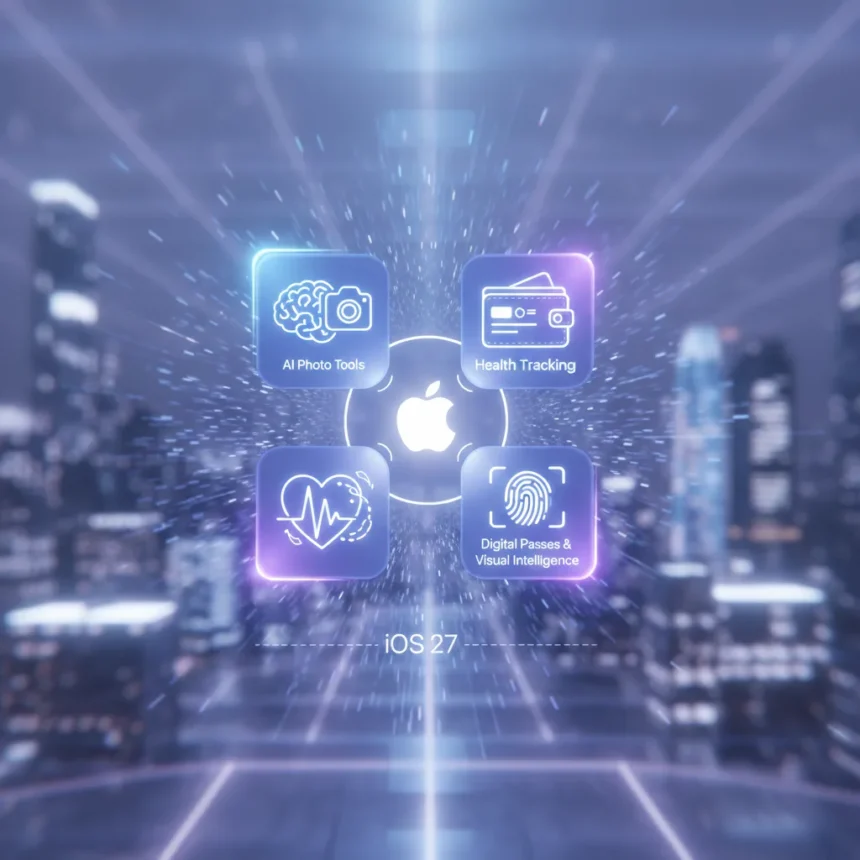
iOS 27 AI photo features are coming, but not in the way the headlines suggest. Backend code analysis by MacRumors on April 16 uncovered at least four new Apple Intelligence features heading to iOS 27, though the term “photo editing overhaul” dramatically overstates what’s actually arriving. The real innovation lies in Visual Intelligence expansion—Apple’s camera-based AI tool that scans real-world objects and integrates data directly into apps like Health, Contacts, and Wallet.
Key Takeaways
- iOS 27 expands Visual Intelligence to scan nutrition labels, phone numbers, and physical coupons—not traditional photo editing.
- MacRumors and tipster Nicolás Alvarez discovered features in backend code on April 16; Apple has not officially confirmed any iOS 27 details.
- New features include Health app AI agent for dietary tracking, third-party chatbot integration in Siri, and adjustable glass effects.
- Visual Intelligence currently works via camera shortcut or Camera Control on iPhone 16; iOS 27 will expand its scope dramatically.
- iOS 27 is expected to launch in fall 2026 following a WWDC announcement; all features remain in code inference stage.
What iOS 27 AI photo features actually include
The headline “AI photo editing overhaul” is misleading. iOS 27 does not introduce new photo editing tools comparable to Google’s Magic Eraser or Samsung’s generative fill. Instead, Apple is deepening Visual Intelligence—a feature that uses AI to recognize objects, text, and patterns in real-world images captured through the camera. Visual Intelligence currently allows users to scan flight tickets and automatically add travel dates to Calendar; iOS 27 extends this capability into health, commerce, and contact management.
The most significant upgrade targets nutrition tracking. iOS 27 will let users point their iPhone camera at food packaging, and Visual Intelligence will extract nutritional data—protein, fats, carbohydrates—and sync it directly to the Health app. This transforms the camera into a dietary logging tool, rivaling dedicated nutrition apps like MyFitnessPal but integrated into Apple’s ecosystem. A second upgrade scans printed information like phone numbers and addresses, converting them to Contacts entries with a single tap. A third feature recognizes physical coupons, tickets, and membership cards, converting them to digital passes in Apple Wallet via AI recognition. Finally, Safari will auto-generate tag names for tab groups based on page themes, using AI to organize browser sessions without manual input.
How iOS 27 AI photo features compare to existing tools
Apple’s current photo editing capabilities include Clean Up, an Apple Intelligence tool that removes unwanted objects from images—functionally similar to Google’s Magic Eraser on Android. iOS 27 does not appear to introduce new object removal or generative fill features. Instead, it shifts focus from editing photos after capture to extracting actionable data from photos during capture. This is a strategic pivot: rather than compete with Google Lens and Circle to Search on image recognition alone, Apple is embedding recognition into productivity workflows—Health, Contacts, Wallet, and Safari.


Visual Intelligence in iOS 27 will operate via the same camera shortcut and Camera Control interface used in iPhone 16, meaning the hardware already exists to support these features. This contrasts with Google’s approach, which spreads image recognition across multiple apps and services. Apple’s tighter integration suggests these features will feel native to iOS rather than bolted-on, though all capabilities remain unconfirmed until beta testing begins.
iOS 27 AI photo features signal Apple’s wearable ambitions
The expansion of Visual Intelligence in iOS 27 is not random. Apple is preparing for a future where camera-equipped wearables—smart glasses, AI-enhanced AirPods, or a wearable AI pin—become primary interfaces. If users can point a pair of smart glasses at a restaurant menu and have iOS extract nutritional data automatically, or scan a business card and populate Contacts, the wearable becomes indispensable. iOS 27 is laying the groundwork for that ecosystem.


Deeper Siri integration across apps and third-party chatbot support in iOS 27 reinforce this strategy. A more capable Siri, coupled with Visual Intelligence, could power voice-and-vision interactions on wearables—ask Siri a question while looking at something, and the AI processes both the query and the visual context. This is why iOS 27 AI photo features extend beyond traditional editing: Apple is building a foundation for ambient intelligence, where cameras, microphones, and AI agents work together smoothly.
When will iOS 27 AI photo features arrive?
iOS 27 is expected to be announced at WWDC in June 2026 and released in fall 2026, though Apple has not confirmed a timeline. All features discovered so far exist only in backend code; none are available in public beta or confirmed by Apple. The code analysis by MacRumors and tipster Nicolás Alvarez is reliable—both sources have accurately predicted iOS features before—but remains speculative until Apple officially reveals iOS 27.
iOS 27 will require compatible devices and Apple Intelligence to be enabled. Apple Intelligence is not available on all iPhone models, languages, or regions, meaning some users may not access these features at launch. Current Apple Intelligence features like Clean Up are limited to iPhone 15 Pro and later; iOS 27 features will likely follow similar hardware requirements.
Will iOS 27 AI photo features work on older iPhones?
Visual Intelligence currently requires iPhone 16 or later due to the Camera Control button and enhanced processing capabilities. iOS 27 AI photo features will almost certainly require iPhone 16 or newer for full functionality, though some features like Health app AI integration might work on iPhone 15 Pro with Apple Intelligence enabled.



Is iOS 27 a major AI upgrade for iPhone?
iOS 27 represents a maturation of Apple Intelligence rather than a revolutionary leap. The features are practical and ecosystem-focused—nutrition tracking, contact management, digital passes—rather than flashy generative tools. This aligns with Apple’s philosophy: AI should be invisible and useful, not attention-grabbing. For users already comfortable with Apple Intelligence in iOS 18 and 19, iOS 27 feels like a natural expansion into health and commerce workflows.
The real story behind iOS 27 AI photo features is not about editing—it is about Apple building a camera-first AI ecosystem that works across Health, Contacts, Wallet, and Safari. Visual Intelligence becomes the bridge between the physical world and digital apps, powered by on-device AI that respects privacy. This is Apple’s answer to Google Lens and Circle to Search, but integrated deeper into iOS itself. When iOS 27 launches in fall 2026, expect these features to feel less like new tools and more like the natural evolution of how iPhones understand the world around you.
Edited by the All Things Geek team.
Source: Tom's Guide