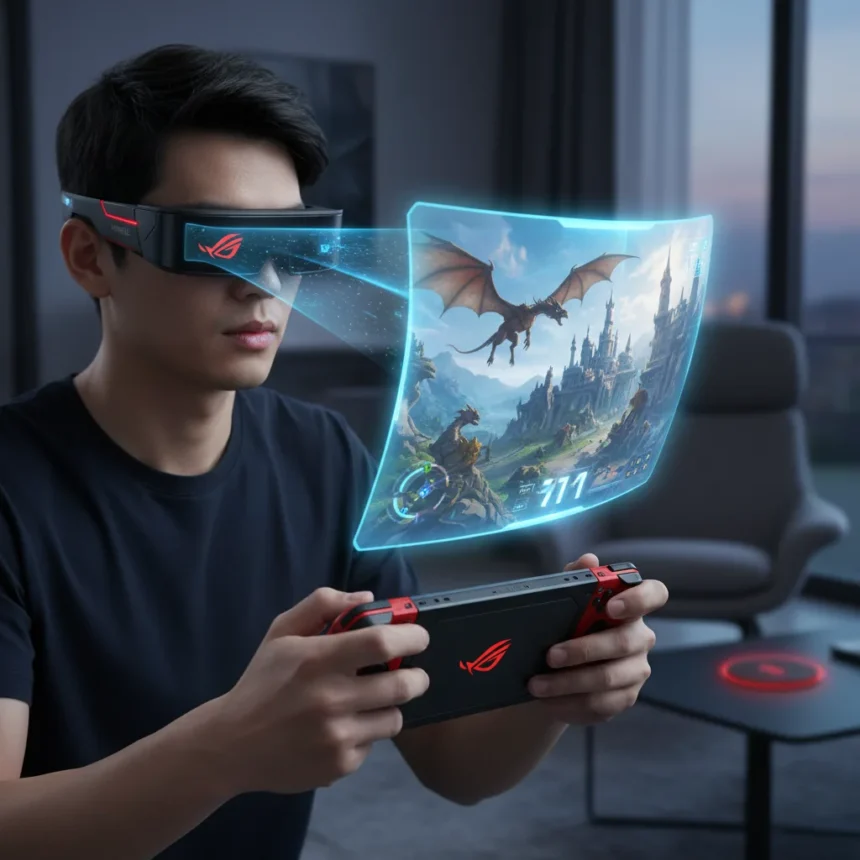
The ROG XREAL R1 gaming glasses represent a bold bet that portable gaming doesn’t have to mean squinting at a tiny screen. These AR wearables transform your handheld device into a 171-inch virtual display, positioning themselves as the first 240Hz micro-OLED wearable display built specifically for gamers. With tight integration for the ROG Ally and worldwide pre-orders now live at Best Buy, these glasses are redefining what “portable” gaming can look like.
Key Takeaways
- ROG XREAL R1 is the first 240Hz micro-OLED wearable display designed for gaming.
- Creates a virtual 171-inch screen from a handheld device or other portable hardware.
- Supports 3DoF spatial modes for enhanced immersion.
- Tight ROG Ally integration makes it a natural pairing for ASUS handheld gamers.
- Now available for pre-order at Best Buy with worldwide rollout planned.
What Makes ROG XREAL R1 Gaming Glasses Stand Out
The ROG XREAL R1 gaming glasses solve a problem that has haunted portable gaming for years: the screen is too small to truly enjoy demanding titles. Instead of forcing players to choose between a handheld’s portability and a monitor’s visual real estate, these glasses split the difference. The 171-inch virtual display transforms how games look and feel when played on the go, whether you’re using a ROG Ally, smartphone, or other compatible device.
The 240Hz micro-OLED refresh rate is the real technical achievement here. Micro-OLED technology delivers superior contrast and color accuracy compared to traditional LCD or LED displays, while the 240Hz refresh rate ensures smooth, responsive gameplay without motion blur or ghosting artifacts. For competitive gaming on a handheld, this matters enormously. The refresh rate matches what high-end gaming monitors deliver, so you’re not sacrificing performance for portability.
The 3DoF spatial modes add another layer of immersion. These allow limited head tracking and spatial awareness within the virtual display environment, making games feel less like you’re watching a screen and more like you’re inside the action. It’s a subtle but meaningful difference from earlier AR glasses that simply projected a flat image.


ROG Ally Integration: The Ecosystem Angle
ASUS didn’t design these glasses in a vacuum. The tight ROG Ally integration suggests that ROG XREAL R1 gaming glasses are meant to be the definitive second-screen experience for ASUS’s gaming handheld. The ROG Ally already offers solid performance for AAA titles, but its 7-inch screen feels cramped during extended play sessions. Pairing it with these glasses transforms the handheld into a full-fledged gaming machine without requiring a docking station or external monitor.
This ecosystem approach also means software optimization. Games and settings can be tuned specifically for the glasses’ display characteristics, refresh rate, and spatial capabilities. That level of integration is something generic AR glasses simply cannot offer. If you already own a ROG Ally, the R1 glasses become a natural upgrade path rather than a risky third-party accessory.


How ROG XREAL R1 Gaming Glasses Compare to Alternatives
The portable AR display space is nascent, with few direct competitors offering similar specs and gaming focus. Most existing AR glasses prioritize productivity or social features over gaming performance. The ROG XREAL R1 gaming glasses distinguish themselves by prioritizing the exact features gamers care about: high refresh rates, low latency, and ecosystem integration rather than generic app compatibility.
Traditional gaming monitors and portable displays offer larger absolute screen sizes, but they require desk space and power. The ROG XREAL R1 gaming glasses eliminate that friction entirely. You’re trading absolute brightness and color accuracy for freedom of movement and the immersive feeling of a wraparound display. For someone traveling or gaming in varied environments, that trade-off strongly favors the glasses.
Pre-Order Details and What to Expect
Best Buy is the launch retail partner for pre-orders, making the ROG XREAL R1 gaming glasses accessible to a broad audience without requiring direct purchases from ASUS or niche tech retailers. The worldwide rollout suggests ASUS is confident in global demand, though specific regional pricing and shipping timelines have not been detailed beyond the pre-order window. The fact that pre-orders are live now indicates availability is expected relatively soon, though an exact launch date has not been announced.
One critical consideration: these glasses are a wearable accessory, not a standalone device. You’ll need a compatible handheld or smartphone to use them. The tight ROG Ally integration makes that pairing obvious for ASUS handheld owners, but smartphone and other device compatibility should be confirmed before ordering if you plan to use the glasses with multiple devices.



Is the ROG XREAL R1 worth buying?
If you own a ROG Ally and spend significant time gaming on the go, the ROG XREAL R1 gaming glasses are worth serious consideration. They solve a real problem—the cramped screen experience—with technology that actually works at high refresh rates. The 240Hz micro-OLED display and 3DoF spatial modes represent genuine engineering effort, not marketing hype.
The glasses make less sense if you’re a casual mobile gamer or if you primarily play on a home console. The value proposition only clicks if you’re willing to wear glasses while gaming and if you regularly use a compatible handheld device. Price will ultimately determine whether these glasses are an impulse buy or a luxury add-on, but the technology itself is sound.
Will ROG XREAL R1 gaming glasses work with my smartphone?
The ROG XREAL R1 gaming glasses are designed to work with handhelds and other portable devices, with particular emphasis on ROG Ally integration. Smartphone compatibility has not been detailed in available information, so check ASUS’s official specifications or Best Buy’s product page before assuming your phone will work smoothly with the glasses.
What’s the difference between 240Hz micro-OLED and standard displays?
Micro-OLED technology produces individual light for each pixel, delivering superior contrast and color accuracy compared to LCD screens that use a backlight. The 240Hz refresh rate means the display refreshes 240 times per second, eliminating motion blur during fast-paced gameplay. Combined, these technologies create a sharp, responsive gaming experience that standard handheld screens cannot match.
The ROG XREAL R1 gaming glasses represent a genuine leap forward for portable gaming. They don’t replace home setups or high-end gaming monitors, but they do something those devices cannot: deliver a theater-scale gaming experience from a wearable form factor. If you’ve ever felt frustrated by your handheld’s small screen, these glasses are exactly what you’ve been waiting for. Pre-orders are live now, and early adopters willing to take a chance on emerging AR gaming technology have the opportunity to define the next era of portable play.
Edited by the All Things Geek team.
Source: Windows Central