





The iPhone 17 Pro Max space photography from Artemis II proves that consumer smartphones can deliver stunning results in humanity’s most extreme environment. On April 2 and April 4, 2026, NASA astronauts aboard the Orion spacecraft shared images of Earth captured with Apple’s flagship device, marking the first “Shot on iPhone” photos taken at the highest altitude ever attempted.
Key Takeaways
- Artemis II astronauts used iPhone 17 Pro Max to photograph Earth from 252,757 miles away, breaking the human distance record since Apollo 17 in 1972
- The iPhone 17 Pro Max features a 48MP camera with 8x zoom, 6.9-inch OLED display rated for 3,000 nits, and nearly 18-hour battery life
- Commander Reid Wiseman and Mission Specialist Christina Koch shared personal photos via iPhone after NASA qualified the device for extended orbit use in February 2026
- Other cameras aboard—including Nikon D5 and Nikon Z9—were chosen for radiation resistance and weight savings, not raw capability
- The iPhone 17 Pro Max is 100,000 times more powerful than the Apollo 11 computer from 1969
Why iPhone 17 Pro Max Made the Cut for Deep Space
NASA does not typically equip astronauts with the latest consumer phones. The fact that Artemis II crew members carried iPhone 17 Pro Max units signals confidence in both the hardware and Apple’s software reliability in extreme conditions. The device was formally qualified for extended orbit use in February 2026, months before launch. Commander Reid Wiseman’s reaction—”There are no words”—captured on social media, reflects the emotional weight of seeing Earth shrink to a marble from a quarter-million miles away.
The iPhone 17 Pro Max specifications tell part of the story: a 48MP main sensor with 8x optical zoom, a 6.9-inch OLED panel capable of 3,000 nits brightness, and nearly 18-hour battery life. These specs matter in space because the device must function without resupply, in an environment where thermal swings are extreme and radiation exposure is constant. Yet the real test is not specs—it is results. The photos NASA released show Earth with Australia visible, sometimes upside down depending on Orion’s orientation, captured with the clarity and color accuracy that modern smartphone sensors deliver.
The metadata embedded in the shared images confirms “Shot on iPhone 17 Pro Max,” answering the question that would otherwise linger: did Apple’s phone really capture these, or were they shot on traditional cameras and simply credited for marketing purposes? Instagram users asked NASA directly, and the agency confirmed the photos came from the iPhone.



iPhone 17 Pro Max vs. Professional Cameras on Artemis II
Artemis II carries multiple camera systems, and the choice of which device to use for which shot reveals priorities. The Nikon D5, a full-frame DSLR with 20.8MP resolution, was used to photograph the Moon itself, including detailed shots of the Orientale basin—features now seen entirely by human eyes for the first time. The Nikon Z9 and even a GoPro HERO4 Black from 2016 round out the kit.
Why older cameras? Weight and radiation resistance. The GoPro HERO4 Black, despite being a decade old, was chosen partly because newer action cameras would add mass that Orion cannot spare. The Nikon D5 is legendary for its low-light performance and durability—a “tank” in photography circles—but it is not the newest Nikon available. The iPhone 17 Pro Max, by contrast, serves a different purpose: personal documentation. Astronauts use it to share moments with mission control and the public, not to conduct scientific imaging. That distinction matters. A smartphone optimized for color, dynamic range, and instant sharing will outperform a camera designed for raw technical data in casual photography scenarios.

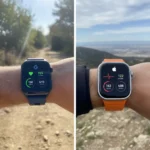

The comparison also highlights a generational gap. The iPhone 17 Pro Max is 100,000 times more computationally powerful than the Apollo 11 guidance computer. That processing power translates to real-time image processing, computational photography, and AI-assisted framing—capabilities that would have seemed like science fiction during the first Moon landing.
What iPhone 17 Pro Max Space Photos Reveal About Smartphone Cameras
The Artemis II images are not the first smartphone photos from space—astronauts have used iPhones in orbit before. But these are the first taken at such extreme distance, in conditions where the device had to function without support or replacement for weeks. The 8x zoom capability of the iPhone 17 Pro Max matters here. From 252,757 miles away, optical zoom allows astronauts to frame Earth’s continents, not just a blue sphere. The 48MP sensor provides enough resolution that crops and enlargements retain detail.
Battery life emerges as a practical consideration. Nearly 18 hours of continuous use sounds modest for a smartphone on Earth, but in space, where charging options are limited and thermal management is tricky, it is a real achievement. The device had to survive the launch vibrations, the vacuum of space, and the radiation environment beyond Earth’s magnetic field.
The 6.9-inch OLED display rated for 3,000 nits brightness serves a purpose beyond aesthetics. In Orion’s cabin, with sunlight streaming through windows and no way to dim the environment, a bright screen is essential for reviewing photos and sharing them with mission control. Astronauts need to see what they have captured immediately, without waiting for downloads or processing.


The Broader Implication: Consumer Tech in Extreme Environments
Artemis II’s use of iPhone 17 Pro Max is not just a marketing moment—it is a data point in a larger conversation about consumer technology reliability. When NASA qualifies a device for deep space, the agency runs extensive testing: thermal cycling, radiation exposure, vibration, vacuum exposure, and more. The fact that a consumer smartphone passed these tests suggests that modern manufacturing tolerances and component redundancy have reached a level where consumer devices can survive environments that would have required custom-built equipment a decade ago.
This does not mean every iPhone 17 Pro Max can survive space. The units aboard Artemis II were specially prepared and tested. But it does mean the underlying design is robust enough to handle extremes. Astronauts trust their lives and their equipment to devices that billions of people use daily. That is a remarkable vote of confidence in modern engineering.
Can you actually take photos like Artemis II astronauts with an iPhone 17 Pro Max?
Not from space, obviously. But the 8x zoom and 48MP sensor aboard Artemis II are the same specs available to anyone who owns the device. The difference is vantage point. Astronauts at 252,757 miles from Earth have a view that no amount of zoom or computational photography can replicate on the ground.
Why did NASA choose iPhone 17 Pro Max over other smartphones for Artemis II?
The device was formally qualified for extended orbit use in February 2026, meaning it passed NASA’s rigorous testing for radiation resistance, thermal stability, and reliability. The iPhone 17 Pro Max’s battery life, display brightness, and camera system also aligned with the mission’s needs for personal documentation and crew communication.
What other cameras are aboard Artemis II?
The Nikon D5 is used for official scientific imaging, including the detailed Moon photographs. The Nikon Z9 and a GoPro HERO4 Black from 2016 round out the kit, chosen partly for radiation resistance and weight savings over newer models.
The iPhone 17 Pro Max space photography from Artemis II is a reminder that the best camera is the one you have with you—even if that “with you” happens to be 252,757 miles from home. NASA’s choice to equip astronauts with consumer phones reflects both the maturity of modern smartphone engineering and the reality that no specialized equipment could improve on what Apple’s flagship delivers for everyday documentation. The images speak for themselves: Earth, captured with clarity and color that would have required a professional camera rig just years ago, now achievable with a device that fits in an astronaut’s pocket.
Where to Buy
Apple iPhone 17 Pro | Apple iPhone 17e | Apple iPhone 17 Pro Max
Edited by the All Things Geek team.
Source: TechRadar