




iPad creative work has defined a generation of digital artists, designers, and content creators. Yet the tablet’s dominance is under real pressure as 2-in-1 hybrid laptops evolve, offering capabilities that once belonged exclusively to Apple’s device. The question is no longer whether the iPad can innovate—it’s whether it still needs to, or whether the market has simply moved on.
Key Takeaways
- iPad creative work once set the standard for portable design, but hybrid 2-in-1 laptops now offer comparable or superior functionality.
- 2-in-1 devices combine full operating systems with touchscreen interfaces, addressing limitations that kept many creators on traditional laptops.
- Creative professionals have successfully transitioned from iPad to hybrid devices without losing productivity or capability.
- The original iPad concept focused on simplicity, but modern creative demands now favor flexibility over ease of entry.
- Apple’s tablet strategy faces an existential question: innovate further or accept a shrinking share of the creative market.
The Original Vision vs. Modern Reality
When Apple first designed the iPad, the vision was straightforward: a simple, intuitive device for consumption and light creation. That original concept established the tablet as a gateway device for casual users and artists exploring digital work. For over a decade, it worked. The iPad became synonymous with digital illustration, note-taking, and creative experimentation. But simplicity, once an advantage, has become a limitation. Modern creators need power, flexibility, and full software ecosystems—things the iPad’s closed architecture resists delivering.
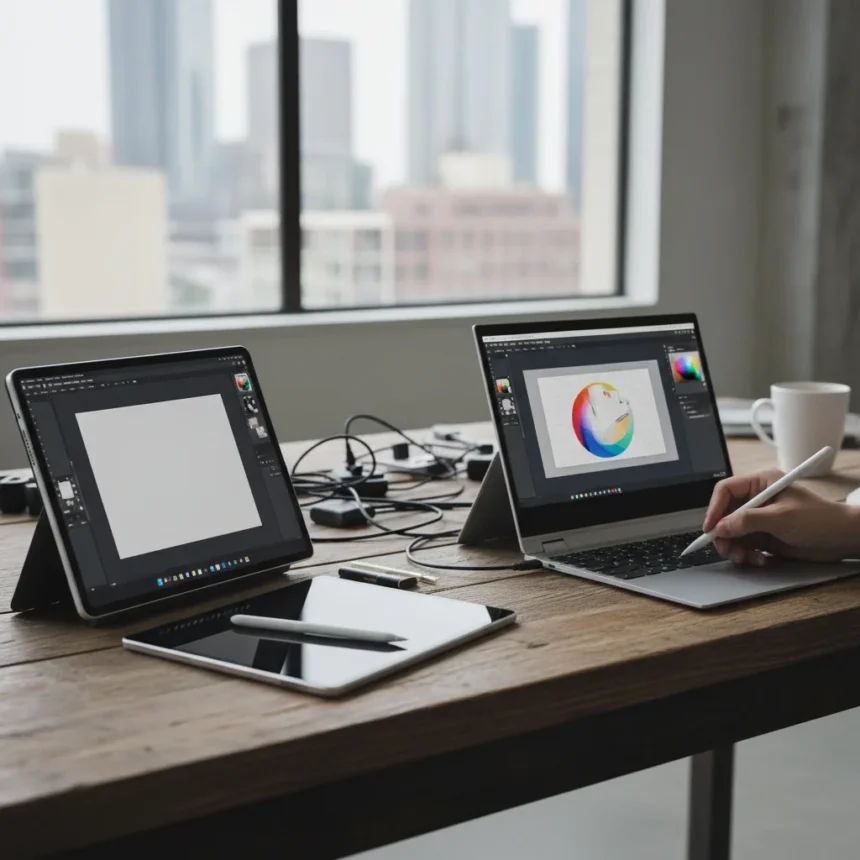
The iPad’s creative dominance rested on a single assumption: that touch-first design was inherently superior for artistic work. This assumption held when alternatives were clunky and limited. Today, that premise crumbles. 2-in-1 laptops have evolved dramatically, offering touchscreen capabilities alongside full operating systems, file management, and unrestricted software access. A designer can now use a hybrid device with a stylus, detach the keyboard, and access the complete Adobe Creative Suite or any specialized tool without compromise. The iPad cannot claim that same flexibility.
Where iPad Creative Work Still Matters
The iPad has not completely lost its appeal for creative professionals. Real artists have built thriving careers using the device—including a professional ballet dancer who became a digital artist with 1.6 million TikTok followers using iPad tools. These success stories prove the tablet remains viable for specific workflows, particularly illustration, animation, and quick ideation. Apps like Brainsparker offer creativity coaching directly on the device, showing that iPad-native tools still serve niche creative communities.

The strength of iPad creative work lies in its focus. For someone who wants to draw, paint, or sketch without distraction, the device excels. The touchscreen responsiveness, the integration with Apple Pencil, and the streamlined app ecosystem create an experience optimized for pure creation. But this strength is also a cage. The moment a creator needs to export files in unconventional formats, run specialized software, or manage complex project workflows, the iPad’s limitations surface. A 2-in-1 laptop can do everything the iPad does for creative work, then switch modes and handle everything else.
The 2-in-1 Laptop Challenge
2-in-1 devices represent the real threat to iPad creative work because they remove the trade-off. These hybrid machines run full Windows or Linux, support stylus input, offer touchscreen interfaces, and can physically transform from laptop to tablet mode. A creator no longer has to choose between a powerful computer and a touch-friendly device—they get both in one. This flexibility appeals to professionals who refuse to maintain separate machines for different tasks.


The iPad’s response has been incremental. Larger screens, better chips, and improved stylus technology are genuine improvements, but they do not address the core problem: the operating system itself constrains what creators can do. iPadOS remains locked down compared to macOS or Windows. Software availability is limited. File management is deliberately simplified. These design choices made sense when the iPad was a consumption device; they become frustrating when you are trying to do serious creative work that demands depth, control, and access to the full software ecosystem.
Why the iPad’s Creative Future Is Uncertain
Apple faces a strategic dilemma with iPad creative work. The company could open iPadOS further, allowing more powerful software and deeper customization—but that risks cannibalizing MacBook sales and abandoning the simplicity that still appeals to casual users. Alternatively, Apple could accept that the iPad’s role is shifting from a creative powerhouse to a supplementary device, useful for specific tasks but not the primary tool for serious professionals. Neither option is attractive.
The market has already started voting. Many design studios, animation teams, and digital agencies that once equipped their staff with iPads now issue 2-in-1 laptops or MacBook Pros instead. The iPad remains popular in education and for casual creators, but professional adoption is plateauing. This is not because the iPad is bad—it is because the alternatives have caught up and, in many cases, surpassed it for the demanding workflows that define creative work.
The irony is that iPad creative work succeeded precisely because it was revolutionary at the time. A touchscreen device designed for artists was genuinely novel. But revolution becomes expectation becomes commoditization. Every major laptop manufacturer now offers stylus support and touchscreen options. The iPad’s first-mover advantage has evaporated. It is now just another option, and increasingly, not the best one for professionals who demand full power and flexibility.


FAQ
Can you still do professional creative work on an iPad?
Yes, but with significant limitations. iPad creative work remains viable for illustration, animation, and design sketching, especially for freelancers and solo artists. However, professionals requiring full software suites, specialized plugins, or complex file management workflows will find the device constraining compared to a 2-in-1 laptop or desktop system.
Are 2-in-1 laptops better than iPads for creative work?
For most professional creative workflows, 2-in-1 devices now offer superior flexibility because they combine touchscreen input with full operating system power. They handle iPad creative work tasks while also supporting desktop-class software and unrestricted file management. The trade-off is weight and simplicity—2-in-1s are more complex machines.
Will Apple fix the iPad’s limitations for creative professionals?
That depends on whether Apple is willing to compromise on simplicity and openness. Significant changes to iPadOS would risk the device’s identity and could cannibalize Mac sales. More likely, Apple will maintain the iPad’s current positioning while letting creative professionals migrate to 2-in-1 devices or MacBooks, accepting a smaller but still profitable market segment.
The iPad’s era as the dominant tool for creative work is ending, not because it failed, but because the market evolved faster than Apple was willing to follow. For casual creators and specific use cases, it remains excellent. For professionals? The road ahead leads elsewhere.
This article was written with AI assistance and editorially reviewed.
Source: Creativebloq