






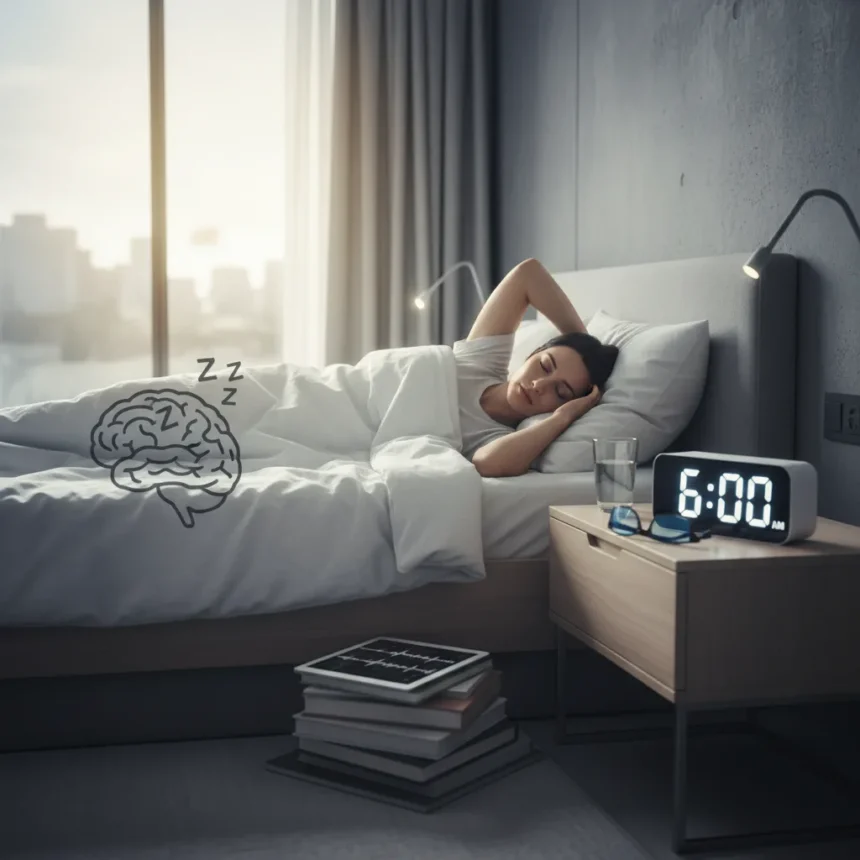
Is 6 hours of sleep enough? The short answer is probably not, according to medical organizations and sleep experts. The American Academy of Sleep Medicine and Sleep Research Society recommend at least 7 hours of sleep per night for adults to maintain health. Yet millions of people worldwide function on 6 hours or less, often without realizing the long-term cost.
Key Takeaways
- Medical guidelines recommend 7+ hours nightly; 6 hours typically falls below optimal health thresholds.
- Individual sleep needs vary: some people are “short sleepers” who function on 6–7 hours, while others need 8+ hours.
- Most adults require 7–9 hours, forming a bell curve with variation based on genetics and lifestyle.
- Consistent 6 hours may be acceptable only if you show no daytime fatigue, need no weekend catch-up sleep, and feel at your best.
- Anxiety about sleep duration itself can trigger orthosomnia, a condition where worry about sleep quality disrupts actual rest.
What Sleep Medicine Says About 6 Hours
Is 6 hours of sleep enough to meet medical standards? No. The National Sleep Foundation and NHS recommend 7–9 hours for adults aged 18–65, with 7–8 hours for those over 65. The American Academy of Sleep Medicine’s recommendation of at least 7 hours is not arbitrary—it reflects decades of research linking sufficient sleep to immune function, metabolic health, mood regulation, and cognitive performance.
The gap between what people actually get and what they need is significant. British adults average just 6 hours 27 minutes nightly, while work nights dip to 6.16 hours. This shortfall is common, but commonness does not mean it is healthy. Chronic sleep deprivation—even at 6 hours per night—accumulates over weeks and months, affecting decision-making, reaction time, and long-term disease risk.
Individual Sleep Needs Vary More Than You Think
Is 6 hours of sleep enough for you specifically? That depends on whether you are a natural short sleeper or long sleeper. Sleep consultant Maryanne Taylor explains the variation: “Some people are ‘long sleepers’ and function better on 8 hours or more, while others are ‘short sleepers’ and do fine on 6–7 hours”. Most adults, however, cluster in the 7–9 hour range, forming a bell curve where some need 7.5 hours and others need 8.5 hours.

The catch is that true short sleepers—people whose genetics allow them to thrive on less sleep—are rare. Many people mistake adaptation for adequacy. You might feel functional on 6 hours after a week, but your cognitive performance, immune response, and emotional resilience degrade over months of insufficient sleep. One expert offers a practical test: “If you’re getting six hours and 45 minutes of sleep and still feeling at your best, with no need to catch up on sleep on the weekend, then you’re fine”. This means no grogginess on Monday morning, no afternoon energy crashes, and no weekend sleep binges to recover.
When 6 Hours Might Be Safe—And When It Is Not
Is 6 hours of sleep enough in specific cases? A University of California study offers surprising reassurance: individuals averaging 6.5 hours nightly can be assured this is a safe amount of sleep, with no health benefit to sleeping longer. However, this finding applies to people who genuinely feel rested and show no signs of sleep debt. The critical qualifier is individual variation and consistency.



If you wake after 6 hours and cannot fall back asleep, the cause matters. Dr. Leah Kaylor notes that waking after 6 hours can result from several factors: circadian rhythm misalignment, sleep fragmentation, caffeine sensitivity, or underlying sleep disorders. Addressing the root cause—whether through sleep hygiene, timing adjustments, or medical consultation—is more productive than forcing yourself to stay in bed longer.
The Real Risk: Worrying About Sleep Itself
Ironically, anxiety about sleep duration can sabotage sleep quality. An expert warns against orthosomnia, a condition where obsession with sleep metrics and duration actually disrupts rest. Tracking your sleep via Apple Watch or other devices can be useful for identifying patterns, but it becomes harmful when the numbers trigger stress. If you spend 30 minutes worrying about whether you are hitting 7 hours, you are likely to sleep worse, not better.
A sleep psychologist advises a simpler approach: “Listen to your body for sleepiness signs and go to bed when you feel them—this should happen about the same time most evenings”. Consistency matters more than perfection. Going to bed at 11 p.m. and waking at 5 a.m. every day is better than erratic sleep times, even if the total is 6 hours.
Should You Aim for 7 Hours Instead?
Is 6 hours of sleep enough, or should you prioritize 7? The evidence suggests 7 hours is a safer baseline for most adults. Seven hours aligns with medical guidelines, leaves room for individual variation downward, and reduces the risk of accumulated sleep debt. Unlike the jump from 7 to 8 hours—which some people find disrupts their sleep cycle and leaves them groggy—moving from 6 to 7 hours typically yields noticeable benefits in energy, focus, and mood.



If you currently get 6 hours, a gradual shift to 6.5 or 7 hours is more sustainable than a dramatic overhaul. Shifting bedtime 15 minutes earlier per week, or waking 15 minutes later, allows your body to adjust without shock. The goal is not obsession but sustainable change.
How do I know if I am getting enough sleep?
You are getting enough sleep if you wake without an alarm feeling refreshed, maintain steady energy throughout the day, do not need weekend catch-up sleep, and feel alert during important tasks. If you regularly feel groggy, struggle with afternoon crashes, or sleep excessively on weekends, you likely need more sleep.
Can I function long-term on 6 hours of sleep?
Some people with specific genetics may function on 6 hours, but most adults cannot sustain this without cognitive and health decline over months or years. Even if you feel fine now, chronic 6-hour sleep is associated with increased risk of metabolic disorders, cardiovascular disease, and impaired immune function.
What should I do if I can only sleep 6 hours?
If you consistently wake after 6 hours, consult a sleep specialist to rule out sleep disorders, circadian misalignment, or environmental factors. Improve sleep hygiene—consistent bedtime, dark room, cool temperature, no screens before bed—before assuming 6 hours is your natural need.
The bottom line: 6 hours of sleep is generally insufficient for most adults, even if you feel okay in the short term. Seven hours is a safer target aligned with medical guidelines and individual variation. But obsessing over the exact number is counterproductive. Focus instead on consistent sleep timing, quality rest without anxiety, and how you feel during the day. That is the real measure of whether your sleep is enough.
Where to Buy
LULUSILK Mulberry Silk Sleep Eye Mask: | Apple Watch Ultra: | Loop Quiet 2 Earplugs :
Edited by the All Things Geek team.
Source: Tom's Guide