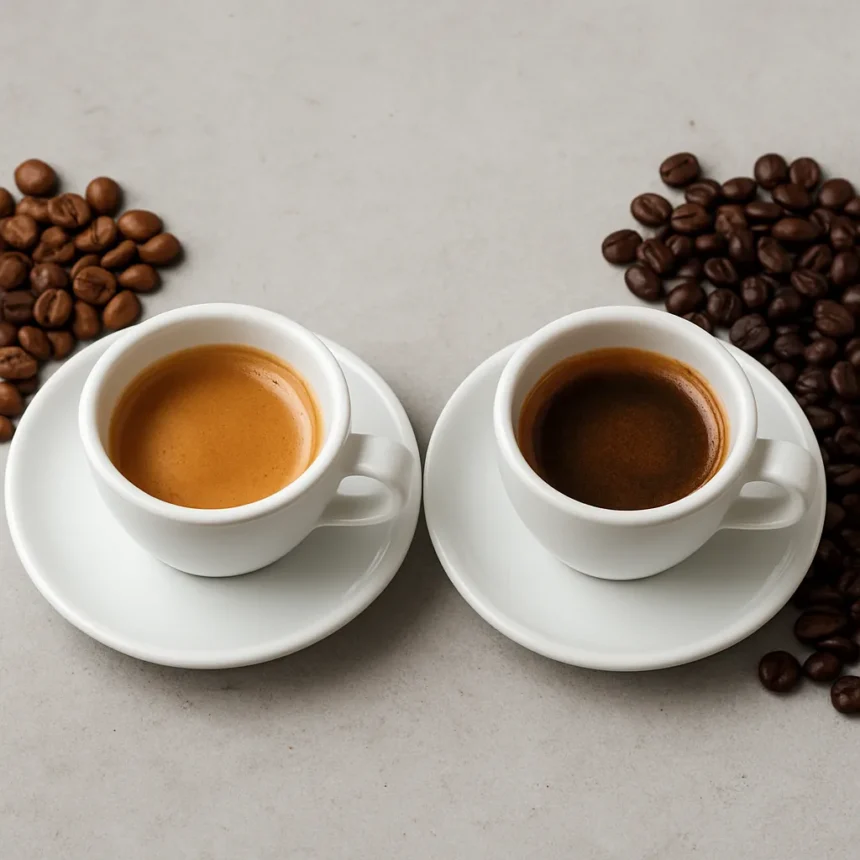
The question every coffee drinker asks at some point: do you really need to spend $20 on premium coffee beans, or will $5 beans get the job done? A direct comparison of cheap vs. premium coffee beans in identical espresso shots provides a clear answer—and it vindicates the coffee snobs.
Key Takeaways
- Cheap vs. premium coffee beans produce measurably different espresso flavors in side-by-side comparison.
- The $5-to-$20 price gap reflects real differences in bean quality, origin, and roasting.
- Premium beans demonstrate superior flavor complexity and balance in espresso extraction.
- Budget beans offer basic caffeine delivery but lack the nuance premium options provide.
- The taste difference justifies the premium price for espresso enthusiasts.
The Experiment: Cheap vs. Premium Coffee Beans Head-to-Head
Testing cheap vs. premium coffee beans requires eliminating variables. The experiment controlled for brewing method, water temperature, extraction time, and grind consistency—keeping only the bean quality as the changing factor. Two identical espresso shots, one from $5 beans and one from $20 beans, reveal whether the price difference translates to the cup. The methodology strips away excuses and forces a direct confrontation with flavor reality.
Budget coffee beans often come from lower-altitude regions, use faster drying methods, or blend rejected lots from premium harvests. Premium beans, by contrast, source from specific microclimates, employ careful fermentation, and receive meticulous roasting attention. These production differences show up immediately in the espresso glass.
What The Taste Comparison Reveals About Coffee Quality
The side-by-side tasting exposes the gap between cheap vs. premium coffee beans with brutal clarity. Premium beans deliver layered flavor notes—citrus brightness, chocolate undertones, floral hints—while budget beans flatten into a one-dimensional bitter or sour profile. Espresso amplifies these differences because the high-pressure extraction method concentrates both desirable and undesirable compounds.


Budget espresso often tastes thin, with harsh acidity or burnt notes that mask any origin character. Premium espresso feels fuller on the palate, with balanced acidity and sweetness that evolves as it cools. The body differs too: premium beans produce a thicker crema with more complexity, while cheap beans yield thin, pale foam that dissipates fast. For espresso drinkers who care about the experience beyond caffeine, this gap is not subtle.
Why The Price Difference Matters For Espresso Specifically
Espresso magnifies bean quality more than any other brewing method. Drip coffee masks flaws with volume and dilution. French press forgives uneven roasting with long steeping time. But espresso—nine bars of pressure forcing water through ground coffee in 25 seconds—leaves nowhere to hide. Every roasting mistake, every harvest defect, every processing shortcut becomes apparent in the cup.



Premium beans demand premium prices because they require more work: selective picking instead of bulk harvesting, careful fermentation instead of quick drying, precise roasting instead of automated batching. A $20 bag reflects real labor and expertise. A $5 bag reflects commodity-grade sourcing and minimal processing investment. When you brew espresso, you taste that investment difference directly.
Cheap vs. Premium Coffee Beans: The Verdict For Your Wallet
Does the price jump justify itself? For casual drip coffee drinkers, the answer is maybe—budget beans work fine when diluted and mixed with milk. For espresso enthusiasts, the answer is yes. The flavor difference between cheap vs. premium coffee beans in espresso is not a subtle preference—it is a structural quality gap that every tasting confirms.
This does not mean you must spend $20 per bag forever. Mid-range beans around $12-15 often hit a sweet spot between quality and value. But the $5-versus-$20 comparison proves that the cheapest option sacrifices real flavor for price. If you own an espresso machine, you have already invested in extraction quality; using budget beans wastes that investment. The beans deserve to match the equipment.
Are expensive coffee beans always worth the premium?
Not always. Brand markup, packaging, and marketing inflate some premium bean prices beyond flavor justification. However, when comparing cheap vs. premium coffee beans at the $5-to-$20 range, the price reflects genuine quality differences in sourcing, processing, and roasting. Mid-range options often deliver 80% of the flavor at 60% of the cost, making them the smart choice for budget-conscious espresso lovers.



How do I know if my coffee beans are actually premium quality?
Look for single-origin sourcing (a specific farm or region), a roast date within two weeks, and tasting notes from the roaster. Premium beans typically cost $12-18 per pound and come from specialty roasters, not grocery store shelves. Cheap beans lack origin specificity and come in bulk bags with vague roast dates. The packaging difference alone signals quality tier.
Can budget beans work in espresso if I dial in perfectly?
Perfect dialing-in improves budget beans but cannot erase their fundamental limitations. You can extract cheap vs. premium coffee beans with technical precision, but you cannot add flavor complexity that was never in the bean. Budget beans will taste better when dialed in correctly, but they will still lack the sweetness, balance, and nuance of premium options extracted with the same care.
The cheap versus premium coffee beans experiment settles a long-standing debate: the coffee snobs are right. Quality beans matter, especially for espresso. The $15 price gap is not snobbery—it is the cost of flavor you can taste in every shot.
Edited by the All Things Geek team.
Source: Tom's Guide