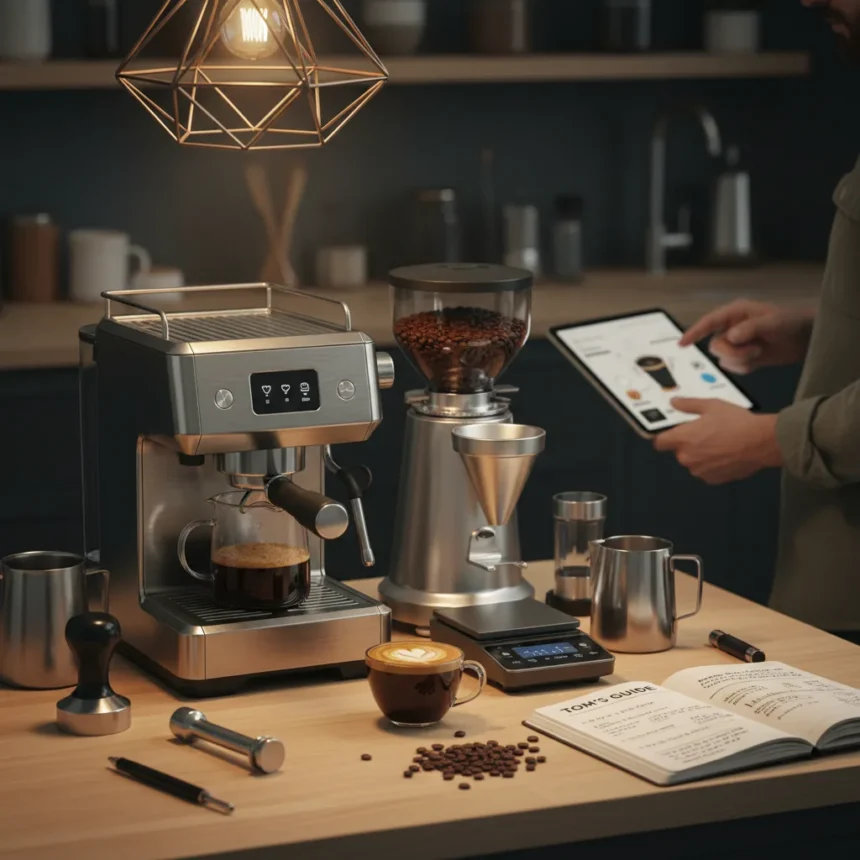
Home coffee brewing has become far more sophisticated than it was a decade ago, with enthusiasts investing in equipment and technique to match what they get at their local café. Tom’s Guide’s Coffee Lab serves as a one-stop destination for the best tips, tricks, and reviews to achieve barista-quality coffee at home, cutting through the noise of marketing claims and internet myths to focus on what actually works [Summary].
Key Takeaways
- Home coffee brewing requires understanding tamping, grind consistency, and water temperature for espresso-quality results.
- Tom’s Guide’s Coffee Lab aggregates tested advice on equipment selection and technique improvement.
- Barista-quality coffee at home is achievable without professional-grade café equipment.
- The Coffee Lab covers reviews, tips, and tricks across brewing methods and gear categories.
- Proper technique matters more than spending thousands on espresso machines.
What Makes Home Coffee Brewing Worth Taking Seriously
Home coffee brewing has crossed a threshold where casual coffee drinkers can genuinely replicate café-quality results with the right approach. The difference between mediocre coffee and excellent coffee at home often comes down to understanding fundamentals: how finely you grind beans, how firmly you tamp grounds in an espresso basket, and what water temperature you use. These variables interact in ways that seem simple but require actual knowledge to execute well.
The appeal of home brewing is not just cost savings—though that matters over time. It is control. You choose your beans, your roast level, your brewing method. You decide whether you want a light, acidic pour-over or a rich, full-bodied espresso shot. A café barista makes those choices for you. At home, you become the barista, which means you need to understand what you are doing.
Home Coffee Brewing Fundamentals That Actually Change Results
Tamping—the act of compressing ground coffee into an espresso basket—has become almost mythologized in coffee culture, with debates raging over pressure, angle, and technique. The reality is more straightforward: consistency matters far more than perfection. If you tamp the same way every time, your shots will be reproducible. If you vary your tamp pressure wildly, your results will scatter across a wide range of quality.
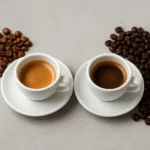

Grind size is equally critical and often overlooked by beginners. A burr grinder—not a blade grinder—is non-negotiable for home coffee brewing. Blade grinders produce inconsistent particle sizes, which means some grounds over-extract while others under-extract, resulting in muddy or sour coffee. A good burr grinder costs less than a single week of café visits and pays for itself in quality alone.
Water temperature sits between 195 and 205 degrees Fahrenheit for most brewing methods. Too cold, and extraction is incomplete; too hot, and you burn the grounds. Many home brewers ignore this variable entirely, using boiling water straight from the kettle, which guarantees over-extraction and bitter coffee. A simple thermometer or a kettle with temperature control transforms your results.

Equipment Choices: What Tom’s Guide’s Coffee Lab Actually Tests
Tom’s Guide’s Coffee Lab approach focuses on practical reviews and recommendations rather than blind brand loyalty. The series evaluates equipment across multiple categories: espresso machines, grinders, pour-over gear, and accessories. The goal is to help home brewers understand what they are actually paying for when they invest in coffee gear.
Not every expensive machine produces better coffee than a moderately priced alternative. Some high-end espresso machines prioritize features that baristas want—programmable pre-infusion, precise temperature control, shot timers—but home users may never use those features. Conversely, some budget machines nail the basics: stable group head temperature, consistent pressure, reliable steam wands. Knowing the difference prevents buyers from overspending on features they do not need.
Grinders deserve special attention because they are the single most impactful purchase a home coffee brewer can make. A mediocre espresso machine paired with an excellent grinder will produce better shots than a premium machine paired with a cheap grinder. This counterintuitive truth trips up many beginners who splurge on the machine first.
How Academic Coffee Labs Approach the Business of Brewing
Beyond consumer-focused guides, institutions like North Central College have established dedicated Coffee Labs focused on the business of coffee, one of few in the US and the first with primary business emphasis. These academic facilities conduct in-house roasting, cupping classes, home brewing classes, packaging, labeling, and shipping, treating coffee as both craft and commercial enterprise.


The existence of collegiate Coffee Labs signals that coffee preparation and business have matured into legitimate fields of study. This legitimacy filters down to home enthusiasts: techniques once dismissed as obsessive are now recognized as valid craft skills. A home coffee brewer studying extraction theory is not overthinking it—they are applying established principles that professionals use daily.
Why Consistency Beats Perfection in Home Coffee Brewing
Many home brewers chase the perfect shot, adjusting variables constantly in search of an ideal that may not exist. A better approach is to establish a repeatable process and refine it incrementally. Brew the same beans with the same grind setting, same tamp pressure, and same water temperature for five days. You will learn how that particular bean behaves. Then change one variable—maybe a slightly finer grind—and observe the effect. This scientific approach beats random tweaking.
The Coffee Lab’s philosophy aligns with this: provide tested guidance so you can execute the fundamentals consistently, then experiment within that framework. You are not trying to become a professional barista overnight. You are trying to stop making bad coffee and start making good coffee reliably.
What equipment do you actually need to start home coffee brewing?
You need three things: a burr grinder, a brewing vessel (French press, pour-over, espresso machine, or Moka pot), and a kettle or water heater. A scale helps with consistency. Everything else is optional refinement. Many home brewers make excellent coffee with under $200 in total gear if they choose wisely.
Is home coffee brewing cheaper than buying café coffee?
Yes, significantly. A café espresso costs $3 to $5; home-brewed espresso costs $0.50 to $1.50 per shot in beans alone. You break even on equipment investment within weeks if you drink coffee daily. The real savings accumulate over months and years.
How long does it take to get good at home coffee brewing?
You can make drinkable coffee immediately with basic technique. Consistency and refinement take weeks to months. Mastery—understanding how variables interact and adjusting fluidly—takes longer. But the improvement curve is steep at first, so even beginners see dramatic results within days of learning the fundamentals.
Home coffee brewing rewards deliberate practice and curiosity. You do not need expensive equipment or rare beans to start. You need to understand the variables that matter—grind, tamp, temperature, timing—and execute them consistently. Tom’s Guide’s Coffee Lab exists to accelerate that learning curve, separating genuine technique from marketing hype. The gap between mediocre home coffee and barista-quality coffee is smaller than most people think. It just requires knowing what actually matters.
Edited by the All Things Geek team.
Source: Tom's Guide