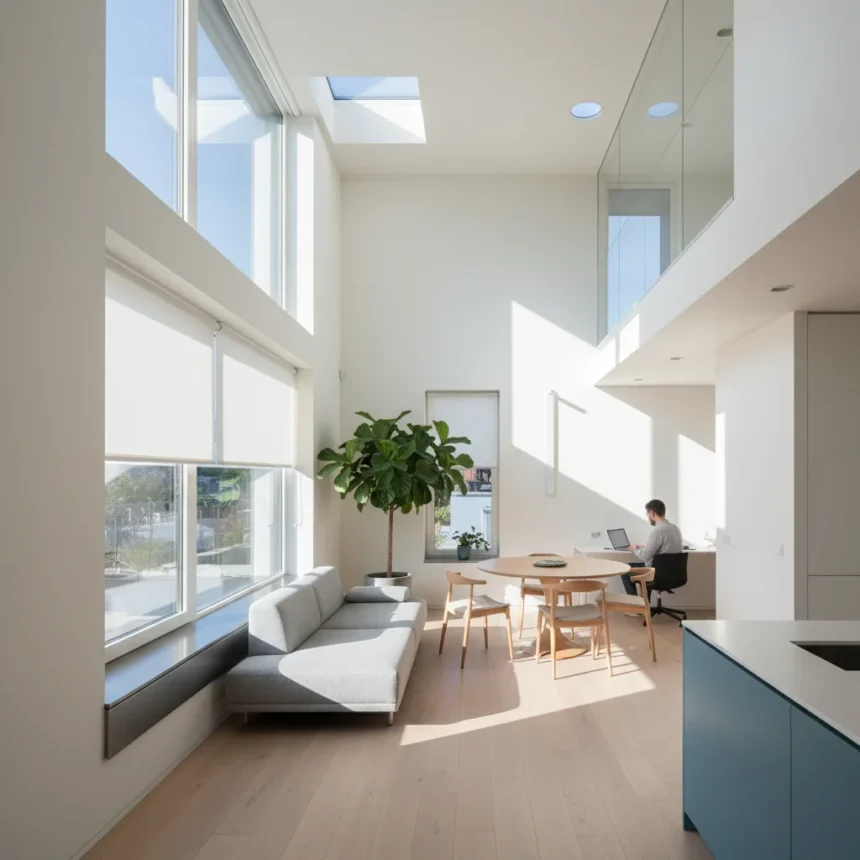
Daylighting strategies offer homeowners a straightforward way to reduce energy consumption without major renovations. Daylighting refers to the practice of using natural light to illuminate interior spaces and reduce reliance on artificial lighting. Lighting typically accounts for 25% to 40% of energy use in buildings, making it a prime target for cost-cutting. By implementing five simple, low-cost changes, you can brighten your home while watching your electricity bills decline.
Key Takeaways
- Lighting accounts for 25–40% of building energy consumption, making daylighting a high-impact efficiency strategy.
- Daylighting can reduce electric lighting energy by 24–80% depending on design and controls.
- Five no-cost or low-cost changes—cleaning windows, switching curtains, rearranging furniture, using mirrors, and painting light colors—brighten rooms naturally.
- Reduced lighting heat generation also cuts cooling costs by 10–20%.
- Daylighting improves wellbeing, productivity, sleep quality, and circadian rhythm regulation.
Why daylighting strategies matter right now
Rising energy costs and climate concerns have made homeowners hungry for quick wins. Daylighting strategies deliver immediate results without the expense of skylights or daylight harvesting systems. Unlike advanced alternatives that require professional installation and significant upfront investment, these five changes cost little to nothing and work in any home. The real payoff: research shows daylighting can reduce electric lighting energy by 24% to 80% depending on implementation and controls. Even conservative estimates suggest 20% to 60% savings with daylight-sensing controls.
What makes daylighting strategies compelling is their dual benefit. You cut energy bills while improving indoor health. Studies link increased daylight exposure to better sleep, improved mood, higher productivity, and stronger circadian rhythms. In one example, a sustainability design leader at Stantec working on a LEED and WELL-certified project discovered that using tunable LEDs alongside daylighting strategies actually reduced lighting load compared to conventional approaches—proving that health and efficiency do not have to compete.
Five daylighting strategies that work
The most effective daylighting strategies require no contractor, no permits, and minimal expense. Start with what you already have: your windows. Clean them inside and out to remove dirt, smudges, and fingerprints that block light transmission. Wash window tracks and use a microfiber cloth with glass cleaner. Repeat this seasonally—dirty windows can reduce light penetration by a surprising margin. This single step costs nothing and yields immediate brightness gains.

Next, replace heavy drapes with sheer curtains or adjustable blinds. Heavy fabrics block 50% or more of available light. Lightweight sheers diffuse sunlight while maintaining privacy, and adjustable blinds let you control light throughout the day. A basic sheer curtain panel costs $20–50 and transforms a dark room into a bright one. Open them during daylight hours and close them at night for insulation.
Rearrange furniture to stop blocking light paths. Move bulky sofas, bookcases, and cabinets away from windows. Position seating to face light sources rather than have windows behind you. Tall furniture creates shadow zones—a simple repositioning often doubles the perceived brightness without any expense. This step takes an afternoon and costs nothing.



Use mirrors strategically to amplify and bounce light. Large mirrors placed opposite windows reflect daylight deeper into rooms. Lean floor mirrors against walls or hang them above furniture. Multiple mirrors create a light-bouncing effect that brightens even interior rooms far from windows. A good mirror costs $30–100 and delivers visible results immediately.
Finally, paint walls light colors—whites, soft grays, pastels, and warm beiges reflect more light than dark tones. High-gloss or semi-gloss finishes reflect even more than matte. Paint ceilings too; light ceilings bounce light upward and make rooms feel larger and brighter. Interior paint costs $30–50 per gallon and a typical room needs one to two gallons.
How daylighting strategies compare to alternatives
Skylights and roof windows offer superior light penetration and can achieve more than 70% daylight autonomy, meaning they meet most lighting needs without artificial light. However, they cost $500–2000+ installed and require professional work. Daylight harvesting systems with photo sensors automatically dim electric lights when natural light is sufficient, reducing lighting energy by 20% to 60%. These systems cost $50–300 per unit plus installation. For renters or budget-conscious homeowners, daylighting strategies deliver comparable results—up to 75% lighting energy savings with good design—at a fraction of the cost and without permanent changes to your home.
The health case for daylighting strategies
Energy savings are only part of the story. Daylighting strategies improve occupant wellbeing in ways artificial lighting cannot match. Marilyne Andersen, a daylight research expert, notes that daylight makes a significant difference in wellbeing, productivity, and health. Increased exposure to natural light regulates circadian rhythms, improves sleep quality, boosts mood, and supports vitamin D synthesis. These benefits compound over months and years, making daylighting strategies an investment in your physical and mental health, not just your utility bill.



Potential downsides to watch
Daylighting strategies are not without tradeoffs. Excessive glazing—installing too many windows or skylights—can increase heat loss in winter and heat gain in summer, potentially raising energy use and carbon emissions if not managed carefully. The five strategies outlined here avoid this risk by working with existing windows and using sheer curtains and strategic mirrors to control light without adding glass. In moderate climates or well-insulated homes, the cooling savings from reduced lighting heat (10–20% reduction) typically offset any heating penalty.
How to start implementing daylighting strategies today
Begin with a walk through your home at different times of day. Identify rooms that feel dark and windows that collect dirt. Prioritize spaces where you spend the most time—bedrooms, home offices, kitchens. Start with the free changes: clean windows and rearrange furniture. Then invest in sheer curtains and mirrors over the next month. Paint walls last, as it is the most labor-intensive step. You should see noticeable brightness improvements within days and measurable energy bill reductions within weeks as you rely less on daytime artificial lighting.
Can daylighting strategies work in any climate?
Yes, daylighting strategies work in any climate, though their impact on heating and cooling varies. In sunny regions, the cooling savings from reduced lighting heat amplify the energy benefit. In cloudy climates, the brightness and wellbeing gains may exceed energy savings, but the strategies still reduce daytime lighting demand. Sheer curtains and strategic mirrors work everywhere because they do not depend on intense sunlight—they maximize whatever daylight is available.
How much can you realistically save with daylighting strategies?
Energy savings depend on your home’s size, window orientation, local climate, and how consistently you use natural light. Research shows average lighting energy reductions of 24% to 80% with daylighting and daylight harvesting systems. Conservative estimates for these five strategies alone suggest 15% to 30% reductions in daytime lighting energy. If lighting represents 30% of your electricity bill, a 20% reduction in lighting use cuts your overall bill by 6%. For a home spending $150 monthly on electricity, that is a $9 monthly saving—modest but real, and it grows if you combine daylighting with other efficiency measures like LED bulbs and smart thermostats.
Daylighting strategies are the rare home improvement that costs little, requires no expertise, and delivers both immediate and long-term returns. The five changes outlined here—cleaning windows, switching to sheer curtains, rearranging furniture, using mirrors, and painting light colors—transform dark rooms into bright ones while trimming electricity costs. Start today, and you will feel the difference within days.
Edited by the All Things Geek team.
Source: Tom's Guide