





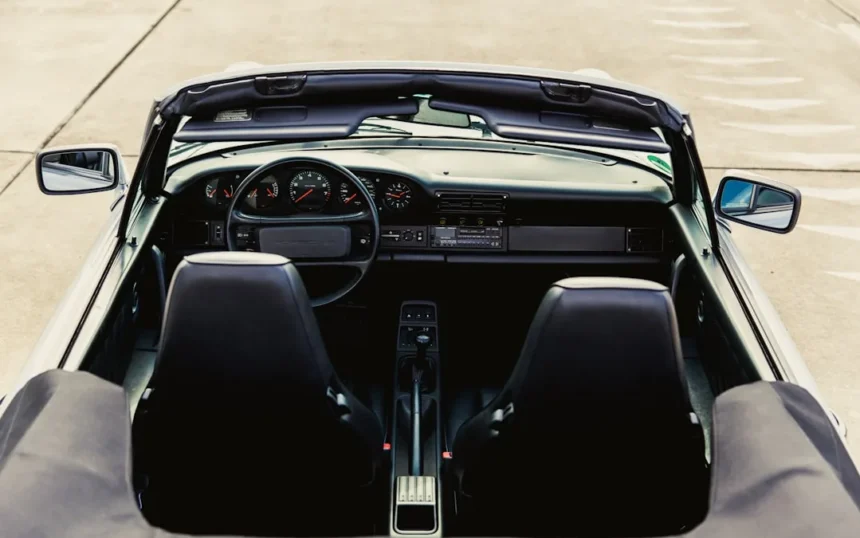
The Porsche 911 GT3 convertible is about to shatter a 25-year tradition. On April 14, 2026, Porsche will reveal the first-ever open-top GT3, a car that trades the purist’s fixed roof for the driver’s emotional connection to the engine note. This is not a soft compromise—it is a deliberate pivot toward what Porsche calls the most exhilarating driver’s car imaginable.
Key Takeaways
- First-ever Porsche 911 GT3 convertible debuts April 14, 2026, with folding soft top and naturally aspirated 4.0-liter flat-six engine
- Naturally aspirated engine rumored at 502-510 horsepower, peaking at 9000rpm with 450Nm torque
- Features aero vents behind front wheel arches, possible retractable rear spoiler, and 6-speed manual transmission option
- Breaks GT3 track-focused tradition by emphasizing open-air sensation over lap-time obsession
- Positioned as potential send-off for naturally aspirated engines before Porsche shifts toward hybridization
For decades, the GT3 has been Porsche’s answer to one question: how fast can we go? The 911 GT3 convertible asks a different one: how good does it feel? That philosophical shift matters. The GT3 Touring already proved that removing the fixed rear wing does not diminish the car’s essence—it sharpens it. Now Porsche is taking that logic further, removing the roof entirely.
Why Porsche Built the 911 GT3 Convertible Now
Porsche faces a narrowing window. The naturally aspirated flat-six is becoming rare in the 911 lineup as hybrid and electric variants multiply. The 911 GT3 convertible arrives as a mechanical love letter before that engine disappears. Prototypes spotted across Europe feature the unmistakable aero vents behind the front wheel arches—borrowed from the hardcore GT3 RS—alongside a fabric convertible top and sporty rear bumper with central dual exhausts. These are not luxury car touches. They are track car components dressed for daylight.
The 992.2 generation GT3 Touring serves as the engineering foundation, meaning the 911 GT3 convertible inherits the naturally aspirated 4.0-liter flat-six rumored to deliver 502-510 horsepower and 450Nm of torque. A 6-speed manual transmission is expected, though Porsche has not confirmed final specifications. The retractable rear spoiler—a feature borrowed from 911 S/T and GT3 RS prototypes—suggests Porsche is serious about aerodynamic efficiency without a fixed wing, a bold choice for an open-top car.

How the 911 GT3 Convertible Compares to Rivals
The current fastest 911 Cabriolet is the Turbo S, a hybrid 3.6-liter flat-six producing 523 kilowatts and 800 newton-meters of torque. That car prioritizes power and everyday usability. The 911 GT3 convertible swings the opposite direction—lighter, more mechanical, naturally aspirated. The 991.2 911 Speedster proved there is hunger for this formula: a GT3 engine in an open-top 911 that celebrates sound and sensation over pure speed. The new convertible inherits that DNA but with modern aero, modern engineering, and modern expectations.
Against the 718 Cayman Spyder RS, the 911 GT3 convertible occupies different territory. The Cayman is mid-engine and lighter; the 911 GT3 convertible is rear-engine and heavier, but it carries the emotional weight of the 911 nameplate and the mechanical credibility of GT3 engineering. Porsche’s own GT3 RS remains the track weapon. The 911 GT3 convertible is the car you drive to feel alive, not to break lap records.



What Makes the 911 GT3 Convertible Special
Porsche’s stated ambition is clear: create one of the most exhilarating driver’s cars imaginable. That phrasing avoids superlatives about speed or power. It targets emotion. An open-top GT3 amplifies the flat-six’s mechanical character—the induction roar, the gear changes, the mechanical feedback through the steering wheel—in ways a fixed roof cannot match. The folding soft top preserves weight distribution and structural rigidity while delivering the sensory overload that makes sports cars worth owning.
The aero vents behind the front wheels are not decoration. They manage airflow over the open cockpit and reduce turbulence, a detail that separates engineering from styling. The possible retractable rear spoiler suggests Porsche engineered the car for both highway cruising and track work, a flexibility the fixed-roof GT3 RS does not need. These choices signal that Porsche did not simply chop the roof off a GT3 and call it done—it redesigned the car around the convertible format.
When Will the 911 GT3 Convertible Launch?
Porsche will reveal the 911 GT3 convertible on April 14, 2026. That reveal date is firm, based on Porsche’s official teaser campaign. Earlier rumors suggested a March 2026 debut, but Porsche has moved the timeline forward. Beyond the reveal, Porsche has not announced pricing, exact specifications, or regional availability. The naturally aspirated engine and manual transmission will likely remain exclusive to this model, making it a collector’s car from day one.
Is the 911 GT3 convertible really the first open-top GT3?
Yes. The 991.2 911 Speedster used GT3 engineering but carried a different nameplate. The new car is officially badged 911 GT3 Cabriolet or GT3 Sport Cabriolet (GT3 S/C), making it the first convertible to wear the pure GT3 designation.



Will the 911 GT3 convertible have a manual transmission?
A 6-speed manual transmission is expected, though Porsche has not confirmed final drivetrain options. Given the car’s emphasis on mechanical emotion and driver engagement, a manual is almost certain.
Why does the 911 GT3 convertible matter now?
This car arrives as Porsche’s last naturally aspirated GT3 before hybridization reshapes the lineup. It is a farewell tour for mechanical purity in the world’s most iconic sports car, and it happens to be open-top. That combination will not exist again.
The Porsche 911 GT3 convertible is not trying to be faster than the GT3 RS or more practical than the Turbo S Cabriolet. It exists to remind us why we fell in love with sports cars in the first place: the sound, the sensation, the mechanical honesty of an engine you can hear and feel. In a world of electric motors and hybrid complexity, that is a radical statement. Porsche is betting that drivers will agree.
Where to Buy
Nextbase iQ | Nextbase 622GW | Thinkware F800 Pro | Nextbase 522GW
Edited by the All Things Geek team.
Source: T3




