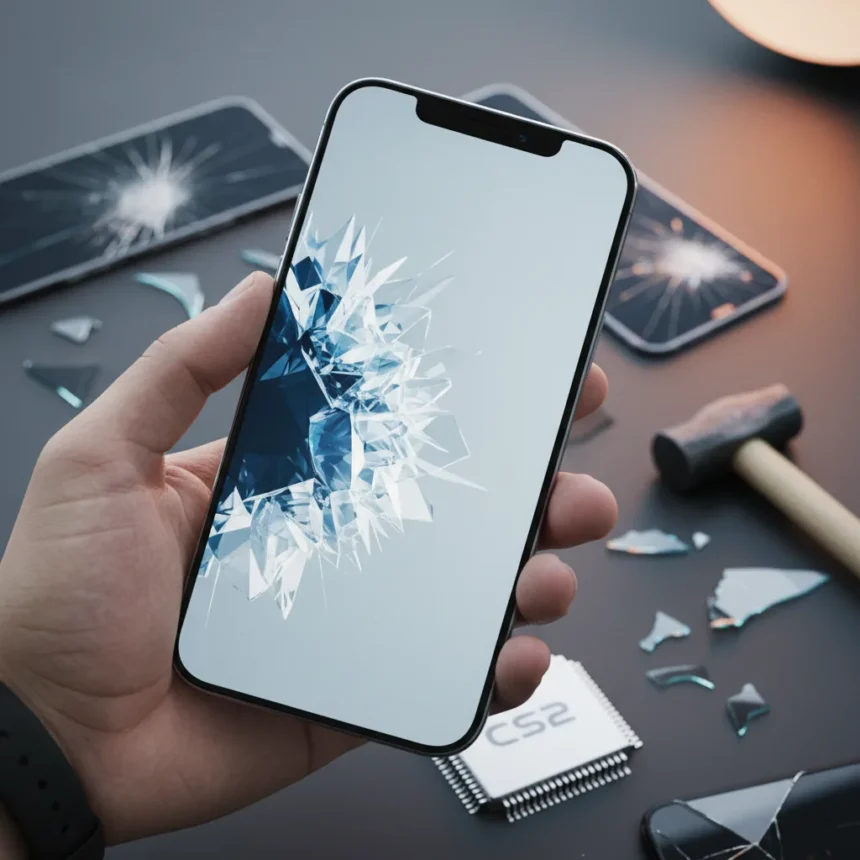
Ceramic Shield 2 on the iPhone 17 is the first iPhone screen glass a reviewer has fully trusted after six months of daily use without a screen protector. Since the iPhone 12 introduced the original Ceramic Shield in 2020, Apple has promised tougher screens with each generation, but until now, none delivered durability that justified skipping protection entirely.
Key Takeaways
- Ceramic Shield 2 survived six months of drops, bumps, and pocket debris without cracks or scratches
- iPhone 17 features Ceramic Shield 2 across all models, marking the first fully trustworthy iPhone glass
- Ceramic Shield 2 is three times as durable as previous versions and twice as strong as competitor smartphone glass
- Original Ceramic Shield (iPhone 12) offered 4x better drop protection than older iPhones but still warranted screen protection
- iPhone 17 Air variant also includes Ceramic Shield 2 on both front and back glass for maximum durability
What Makes Ceramic Shield 2 Different
Apple’s Ceramic Shield 2 represents a genuine leap in screen durability. The iPhone 16 introduced a version 50% tougher than the iPhone 12’s original formulation and twice as strong as other smartphone glass. The iPhone 17 takes this further with Ceramic Shield 2, described as the company’s most advanced glass-ceramic formulation yet. The material uses nano-ceramic crystals smaller than light wavelengths, delivering both transparency and strength without the brittleness of traditional tempered glass.
The original Ceramic Shield, developed with Corning, promised 4x better drop protection than pre-Ceramic Shield iPhones and toughness exceeding any smartphone glass. Yet reviewers continued recommending screen protectors because the glass still scratched and cracked under real-world abuse. Ceramic Shield 2 changes that calculation. After six months of unprotected daily use on an iPhone 17, the screen remained pristine—no cracks, no scratches, no visible damage from drops or pocket debris.
How Ceramic Shield 2 Stacks Against Competitors
Android phones typically rely on Gorilla Glass, Corning’s consumer flagship glass. Gorilla Glass Victus offers 2x scratch resistance compared to Gorilla Glass 6 and 4x more than rival aluminosilicate glasses. Apple claims Ceramic Shield exceeds all smartphone glass in durability, and Ceramic Shield 2 extends that advantage further. The key difference: Ceramic Shield uses nano-crystals embedded in a glass matrix, whereas Gorilla Glass relies on chemical strengthening alone. That architectural difference translates to real-world resilience.


One caveat: the iPhone’s aluminum frame edges remain vulnerable. Pants rivets, concrete, and keys scratch the frame more easily than the screen itself, which means Ceramic Shield 2 solves the durability problem Apple created but didn’t fully address in earlier designs.
Should You Skip the Screen Protector?
For the first time with an iPhone, the answer is genuinely yes—if you own an iPhone 17 with Ceramic Shield 2. A reviewer’s six-month unprotected use case is not a controlled lab test, but it mirrors the real-world abuse most users inflict: drops from pocket height, bumps against keys and coins, and daily friction in bags and pockets. No cracks. No scratches. That’s the first time an iPhone glass has delivered on the durability promise.



The iPhone 17 Air variant includes Ceramic Shield 2 on both the front and back, offering protection from both sides. Even the standard iPhone 17 models feature the same Ceramic Shield 2 as the Pro variants, meaning durability is no longer a premium feature—it’s standard across the lineup.
Does This Mean Apple Finally Got It Right?
Ceramic Shield 2 proves Apple learned from six years of iterative improvements. The original Ceramic Shield (iPhone 12, 2020) was a breakthrough but incomplete. iPhone 16 doubled down with a 50% tougher formulation. iPhone 17’s Ceramic Shield 2 closes the gap between lab claims and real-world performance. Whether this durability persists beyond six months or holds up for a full two-year ownership cycle remains unknown—but the initial evidence suggests Apple’s screen glass has finally caught up to its marketing claims.
Can Ceramic Shield 2 handle drops on concrete?
A reviewer used an iPhone 17 with Ceramic Shield 2 for six months without a screen protector and reported no cracks or scratches from drops and bumps. While this is not a formal drop test from a specific height, it demonstrates real-world resilience that earlier iPhone screens did not achieve.
Is Ceramic Shield 2 scratch-resistant?
Ceramic Shield 2 survived six months of daily pocket use, keys, coins, and other contact without visible scratches. The aluminum frame edges remain more prone to scratching from rivets and concrete, but the screen itself proved resistant to the everyday abrasion that typically damages smartphone glass.



Should I upgrade to iPhone 17 for Ceramic Shield 2?
If your current iPhone’s screen is cracked or you regularly replace broken displays, Ceramic Shield 2 on the iPhone 17 eliminates that expense and frustration. For users with older iPhones relying on screen protectors, the upgrade removes a daily annoyance. For iPhone 16 owners, the durability improvement is incremental—the iPhone 16 already offered solid protection with its 50% tougher glass.
Ceramic Shield 2 finally delivers on a promise Apple made with the original Ceramic Shield in 2020: a screen tough enough to trust without additional protection. After six years and multiple iterations, iPhone glass has caught up to reality.
Where to Buy
Apple iPhone 17 Pro | Apple iPhone 17 Pro Max | Apple iPhone 17e
Edited by the All Things Geek team.
Source: TechRadar