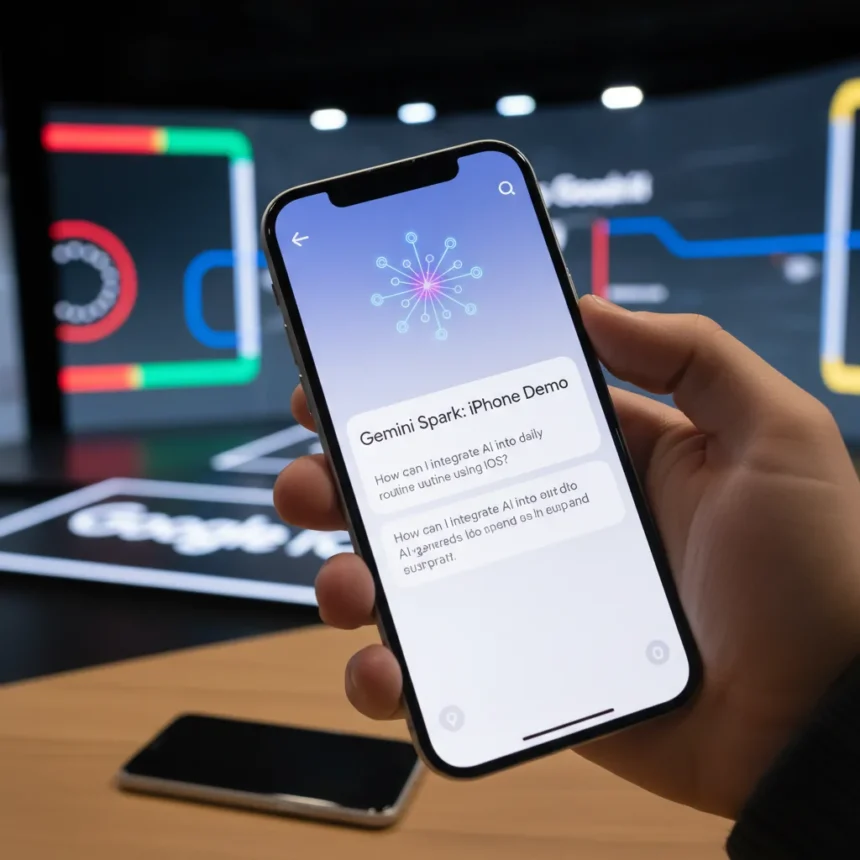
Google’s decision to demo Gemini Spark on an iPhone rather than a Pixel phone at Google I/O wasn’t a mistake—it was a calculated move that exposes how the search giant is rethinking its AI strategy. Instead of treating Gemini as a Pixel exclusive or Android-first feature, Google is positioning it as a cross-platform tool designed to win over the world’s largest smartphone user base: iPhone owners.
Key Takeaways
- Google demonstrated Gemini Spark using an iPhone at Google I/O, not a Pixel device.
- The choice signals Google is targeting iPhone users, not just existing Android customers.
- Apple’s massive market share makes iPhone users an essential audience for AI adoption.
- This reflects a broader shift toward cross-platform AI positioning rather than device exclusivity.
- The demo strategy suggests Google views Gemini as a service, not a Pixel differentiator.
Why Google Chose iPhone for the Gemini Spark Demo
Google’s selection of an iPhone to showcase Gemini Spark at its own developer conference reveals a pragmatic truth about the smartphone market: Android dominance in unit sales doesn’t translate to the purchasing power and ecosystem lock-in that iPhone users represent. By demoing Gemini Spark on Apple hardware, Google signaled that the feature isn’t locked behind a Pixel paywall—it’s a service designed for the broadest possible audience. This approach acknowledges that winning AI adoption requires reaching users where they already are, not forcing them to switch devices.
Apple’s market dominance, particularly in premium segments and among wealthy early adopters, makes iPhone users a critical audience for any company pushing new technology. Google understands that if Gemini Spark is going to become a standard AI assistant, it needs to work smoothly on the device that roughly half the world’s smartphone users carry. Demonstrating the feature on an iPhone at Google I/O sends a clear message: Gemini is not Android-exclusive, and it’s not Pixel-exclusive. It’s a platform-agnostic AI service.
The Cross-Platform Strategy Behind the Demo
This choice reflects a fundamental shift in how Google is positioning its AI ambitions. Rather than using Google I/O as a stage to celebrate Pixel phones and Android exclusives, Google is treating Gemini as a service layer that transcends hardware. The Gemini Spark demo on iPhone demonstrates that Google’s AI future depends on being available to users regardless of their device choice. That’s not a concession to Apple—it’s a recognition that AI adoption will be determined by usefulness, not brand loyalty.


By showcasing Gemini Spark on iPhone, Google is also subtly undercutting the notion that Apple’s own AI initiatives are the only viable option for iPhone users. If Gemini works well on iPhone, users don’t need to wait for or rely solely on Apple’s AI features. This positions Google as the vendor of choice for AI services across ecosystems, rather than a company tied to Android’s fortunes. The strategy works because it doesn’t require iPhone users to make a hardware switch—they can adopt Gemini immediately.
What This Means for Pixel and Android
This doesn’t mean Google is abandoning Pixel or Android. Rather, it suggests Google recognizes that Pixel’s value proposition must rest on more than just being the first to run Google AI features. If Gemini Spark launches on iPhone simultaneously or nearly so, Pixel’s advantage lies in integration depth, customization, and the full Android experience—not exclusive access to Google’s AI tools. This is a maturation of Google’s strategy: Pixel phones should compete on engineering and experience, not artificial feature scarcity.



For Android users, the broader implication is that Google is confident enough in Gemini’s quality to let it stand on its own merits across platforms. If the feature is good, it will drive adoption regardless of device. If it’s mediocre, restricting it to Pixel won’t save it. Google’s choice to demo on iPhone reflects that confidence—and that calculus.
How This Signals a Shift in AI Competition
The iPhone demo also reveals how the AI arms race has changed the competitive landscape. Apple, Google, and other tech giants are no longer fighting primarily over hardware or operating systems. They’re fighting over who becomes the default AI assistant in users’ pockets. That battle is won by reaching users where they are, not by forcing them to switch ecosystems. Google’s willingness to showcase Gemini Spark on iPhone at its own event demonstrates that the company understands this shift.
This approach contrasts sharply with how Google has historically promoted Android and Pixel. In years past, Google I/O served as a stage to celebrate Android’s advantages and announce Pixel-exclusive features. Now, Google is using the same stage to show that its AI tools work everywhere. That’s a significant strategic pivot, and it suggests Google believes the future of competition is about services and AI, not about winning the smartphone hardware war.
Does this mean Google is giving up on Pixel?
No. The iPhone demo doesn’t signal that Google is deprioritizing Pixel or Android. Instead, it reflects a recognition that Pixel’s competitive advantage in the AI era comes from deep integration, customization, and the full Android experience—not from exclusive access to Google’s AI features. Pixel phones should win on merit, not on artificial restrictions.


Will Gemini Spark be available on all iPhones?
The research brief does not specify which iPhone models will support Gemini Spark or when the feature will roll out to Apple devices. Google’s demo on iPhone at Google I/O confirms the feature works on iOS, but availability details remain unclear based on the information available.
Why didn’t Google demo Gemini Spark on a Pixel phone instead?
Demoing on iPhone sends a stronger message: Gemini Spark is not a Pixel exclusive or an Android-only tool. It’s a cross-platform service designed for the broadest possible audience. By choosing iPhone, Google emphasized that the feature’s value transcends device ecosystems and appeals to users regardless of their hardware choice.
Google’s choice to demo Gemini Spark on an iPhone at Google I/O is not a contradiction—it’s a statement. The company is signaling that the future of AI competition is won by reaching users where they are, not by forcing them to switch devices. For iPhone users, it means powerful Google AI tools are coming to their ecosystem. For Pixel users, it means Google’s competitive advantage must come from deeper integration and superior experience, not from gatekeeping features. For the broader tech industry, it’s a reminder that in the AI era, cross-platform availability trumps hardware exclusivity.
Where to Buy
Apple iPhone 17 Pro | Samsung Galaxy S26 | Samsung Galaxy S26 Plus | Samsung Galaxy S26 Ultra | Google Pixel 10
Edited by the All Things Geek team.
Source: TechRadar