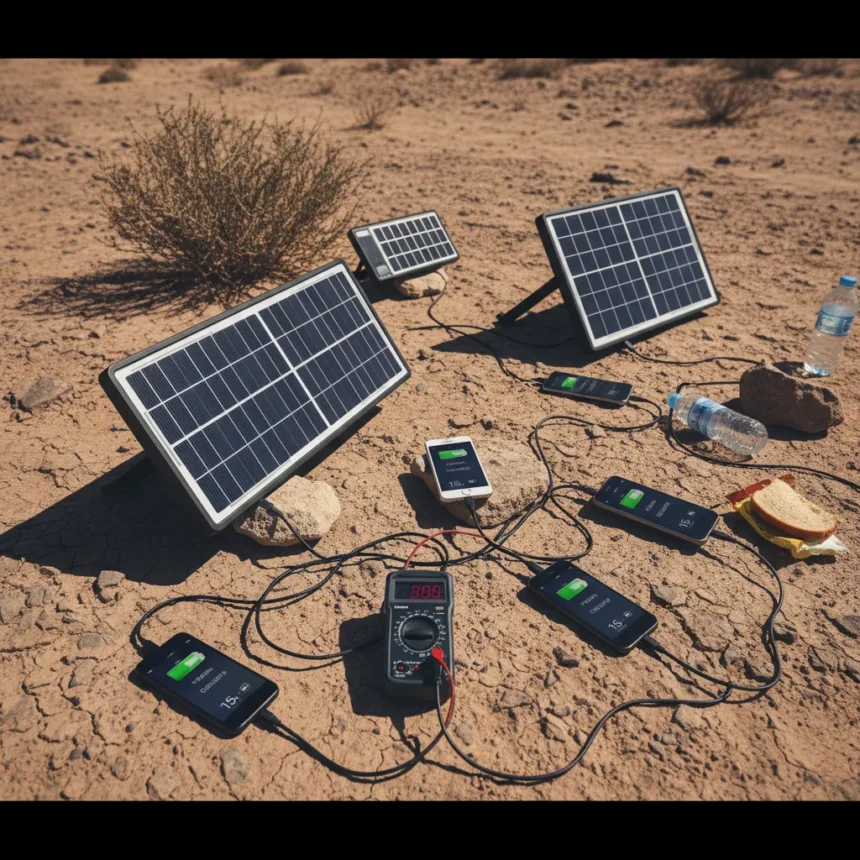
Portable solar panels for phones have become the go-to fantasy for anyone who spends time outdoors. The pitch is simple: unlimited power from the sun, no plugs required, never worry about battery again. The reality, after hands-on testing, is considerably less romantic.
Key Takeaways
- Solar charging works best in direct sunlight with minimal cloud cover and ideal angle positioning.
- Real-world charging speeds depend heavily on weather, time of day, and panel orientation.
- Portable solar panels serve niche outdoor use cases better than daily commute scenarios.
- Panel size, wattage rating, and phone battery capacity all affect practical charging time.
- Hybrid approaches combining solar with traditional batteries often outperform solar-only setups.
Why Portable Solar Panels for Phones Sound Better Than They Perform
The appeal of portable solar panels for phones is straightforward: they harness free, infinite energy from the sun. No cables to forget, no wall outlets to hunt for, just place a panel in daylight and watch your battery climb. Manufacturers love this narrative because it sells the dream of energy independence. The problem is that real sunlight, real phones, and real outdoor conditions rarely cooperate with the marketing copy.
Solar panels generate power based on light intensity, angle, and surface area. A typical portable solar panel rated at 20 watts does not deliver 20 watts to your phone unless conditions are absolutely perfect. Cloud cover cuts output dramatically. Time of day matters—morning and late afternoon sun hits at shallow angles, reducing efficiency. Even panel orientation requires constant adjustment to maintain peak performance. Most users do not spend their day rotating a solar charger every fifteen minutes to chase the sun.
Real-World Testing: What Actually Charges Your Phone
Testing portable solar panels for phones reveals a gap between rated capacity and practical output. A 20-watt panel in full midday sun might deliver 12-15 watts of usable power to your phone. Cloud cover or haze cuts that to 5-8 watts. Early morning or late afternoon? Expect 3-6 watts. Your phone’s charging port and internal power management also matter—many phones cannot accept power faster than 15-18 watts anyway, so oversized panels do not automatically mean faster charging.


Battery capacity compounds the problem. A modern smartphone holds 4000-5000 mAh. Charging from empty to full in bright sunlight takes 2-3 hours of direct exposure. Most users do not sit still in one spot for three hours while holding a solar panel at the optimal angle. Add clouds, shade, or movement, and charging time stretches to 4-6 hours or longer. For comparison, a traditional portable battery bank charges the same phone in 1-2 hours and works indoors, in cars, and at night.
When Portable Solar Panels for Phones Actually Make Sense
Solar panels are not useless—they excel in specific scenarios. Backcountry hikers, remote campers, and outdoor enthusiasts who spend full days in sunlight benefit from solar charging because they have time, sunlight, and motivation to manage the setup. If you hike eight hours daily in clear weather, a solar panel becomes a genuine advantage. You generate power passively while walking or sitting at camp.



Day trips to the beach, park, or outdoor festival represent a middle ground. You get several hours of reliable sunlight and minimal movement. A portable solar panel can top up your phone between activities. This is not fast charging, but it extends your outdoor time without draining your battery completely.
Daily commuters, office workers, and urban users rarely benefit from portable solar panels for phones. You spend most of your time indoors or under shade. Charging happens during lunch or coffee breaks—brief windows with unpredictable sunlight. A traditional portable battery bank is faster, more reliable, and works everywhere.
Portable Solar Panels vs. Hybrid Alternatives
The smartest approach often combines solar and battery. A hybrid charger includes a built-in battery plus small solar panels. You charge the battery from the wall at home, then use solar to top it up during the day. This removes the pressure for perfect sunlight—your battery provides baseline power while solar extends your runtime. Hybrid chargers cost more upfront but deliver practical charging in real-world conditions. You do not need perfect sun, and you do not sacrifice charging speed.
Traditional portable battery banks remain the fastest and most reliable option for phone charging. They charge at full speed regardless of weather, time, or location. The trade-off is that you must remember to charge them at home. Solar panels shift that responsibility to the sun, which is unreliable in most climates.



What Panel Size and Wattage Actually Mean
Portable solar panel specifications often mislead. A 20-watt panel is rated for ideal lab conditions: perpendicular sunlight, 25°C temperature, and zero atmospheric interference. Real-world output is typically 40-60 percent of the rated wattage. A 20-watt panel delivers 8-12 watts in good conditions. Marketing rarely emphasizes this gap. Panel size matters too—larger panels capture more light, but they are harder to carry and position. Most portable options range from 10 to 40 watts and weigh 200 to 1000 grams. Heavier is not always better if you are hiking or traveling.
Is a Portable Solar Panel Worth Buying?
Portable solar panels for phones make sense if you spend significant time outdoors in sunny climates and can tolerate slow charging. They add weight and bulk to your bag. They require active management to work well. They do not charge your phone as fast as a wall charger or portable battery. But they do provide power without batteries to recharge, which appeals to certain users. If you camp, hike, or travel to sunny regions regularly, a solar panel is a legitimate tool. If you work indoors, live in a cloudy climate, or need fast charging, a portable battery bank is the smarter choice. Honest assessment of your actual outdoor time is the key to avoiding an expensive gadget that sits unused in a drawer.
How long does it actually take to charge a phone with a portable solar panel?
Charging time depends on panel wattage, phone battery capacity, and sunlight conditions. A 20-watt panel in bright midday sun charges a 4000 mAh phone in 2-3 hours. Cloud cover, shade, or suboptimal angle extends this to 4-8 hours. Traditional chargers achieve the same task in 1-2 hours. Solar charging is slower because real-world sunlight delivers less power than wall outlets.
Do portable solar panels work on cloudy days?
Portable solar panels generate power on cloudy days but at reduced output. Cloud cover typically cuts efficiency to 25-50 percent of rated capacity. A 20-watt panel might produce 5-10 watts on an overcast day. Charging is possible but slow. In heavily clouded regions, solar panels become impractical as primary chargers.
What is the difference between a solar panel and a portable battery bank?
A portable battery bank stores energy from wall charging and releases it to your phone on demand. A solar panel generates power directly from sunlight without a battery. Battery banks are faster and location-independent. Solar panels are lighter for extended outdoor use but require sunlight and time. Many users choose hybrid chargers that combine both technologies.
Portable solar panels for phones occupy a narrow but real market segment. They work best for outdoor enthusiasts who can manage their limitations and accept slower charging in exchange for solar independence. For everyone else, traditional portable batteries remain the practical choice. The sun is free, but your time and convenience have value too.
Edited by the All Things Geek team.
Source: Tom's Guide