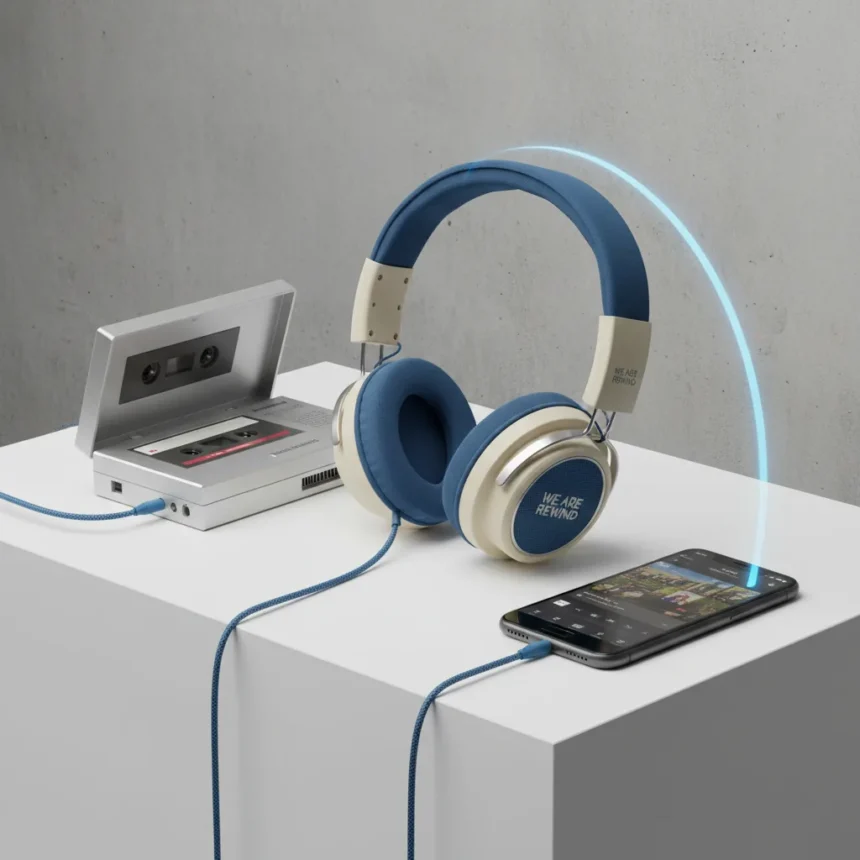
We Are Rewind’s new retro Bluetooth headphones continue the brand’s obsession with 80s aesthetics, bridging the gap between vintage cassette players and modern smartphones. The standalone headphones represent the company’s expansion beyond its earlier Blaster Curtis retro release, cementing its position in the growing wave of nostalgia-driven audio products. Unlike competitors chasing latest specs, We Are Rewind is betting that listeners still want to spin cassettes—and that they want headphones that look the part while doing it.
Key Takeaways
- We Are Rewind’s retro Bluetooth headphones work with both cassette players and modern phones.
- The product continues the brand’s 80s-inspired design direction established by the Blaster Curtis.
- Retro audio products are gaining traction alongside modern wireless alternatives.
- The headphones represent a niche market segment prioritizing aesthetic over latest technology.
- Competitors like FiiO offer modern retro-styled options with contemporary specs like 40mm drivers and LDAC support.
Why Retro Bluetooth Headphones Matter Right Now
The resurgence of retro Bluetooth headphones reflects a broader cultural shift away from minimalist tech design. Younger listeners are discovering cassettes and vinyl as tangible alternatives to streaming, while older audiences want hardware that matches their nostalgic listening habits. We Are Rewind’s dual compatibility—working with both cassette decks and Bluetooth-enabled phones—solves a real problem: how do you use the same headphones for legacy and modern audio sources without switching devices? That practical flexibility, wrapped in 80s styling, is the core appeal.
The market for retro-inspired audio isn’t small. T3’s broader coverage of retro tech shows sustained interest in products that trade contemporary minimalism for character and visual identity. We Are Rewind has positioned itself as a leader in this space, moving beyond novelty into a coherent product line where each release reinforces the brand’s retro identity.
How We Are Rewind Retro Bluetooth Headphones Stack Against Competitors
The closest competitor in this space is FiiO’s retro-styled EH11 headphones, which take a different approach. FiiO’s model includes 40mm dynamic drivers, LDAC codec support, and 30 hours of battery life—modern specifications housed in a retro design. The FiiO EH11 costs around £29.27, making it an affordable entry point for listeners who want retro aesthetics with contemporary audio tech.


Where We Are Rewind’s retro Bluetooth headphones differ is in their dual-purpose design philosophy. Rather than simply adding Bluetooth to a retro form factor, We Are Rewind built the headphones to work smoothly with cassette players, acknowledging that some users still actively use analog hardware. This isn’t a gimmick—it’s a genuine feature for collectors and enthusiasts who maintain vintage playback equipment. FiiO’s EH11, by contrast, is purely a modern Bluetooth device with retro styling, making it the better choice for listeners who want contemporary features without the cassette player requirement.
The Design Philosophy Behind Retro Bluetooth Headphones
We Are Rewind’s approach to retro Bluetooth headphones reflects a philosophy that design should tell a story. The 80s styling isn’t ironic or detached—it’s the product’s entire identity. By making the headphones compatible with cassette players, the brand validates the aesthetic as functional rather than purely nostalgic. This matters because it separates We Are Rewind from brands that slap retro colors onto generic modern hardware and call it a day.



The standalone nature of the headphones is also significant. They’re not tied to a specific cassette player or limited to one use case. Listeners can take them from their bedroom cassette deck to their commute with a smartphone, and the headphones adapt to both contexts. That flexibility, combined with authentic 80s design language, creates a product that feels intentional rather than gimmicky.
Is the We Are Rewind retro Bluetooth headphones worth buying?
That depends on your priorities. If you actively use cassette players and want headphones that match your setup while also supporting modern Bluetooth devices, We Are Rewind’s retro Bluetooth headphones are a natural fit. If you’re purely a digital listener seeking retro aesthetics with contemporary audio specs, the FiiO EH11 offers better value and more advanced features at a lower price point. The choice comes down to whether dual cassette-and-Bluetooth compatibility justifies the price premium—and whether you genuinely use cassette players.
What other retro audio products has We Are Rewind released?
We Are Rewind’s Blaster Curtis was an earlier retro release that established the brand’s design direction. The brand has built momentum in the retro audio space by maintaining consistent aesthetic and expanding the product line rather than releasing one-off novelties. This strategy suggests the company plans to develop a full ecosystem of retro-inspired audio gear.
How do retro Bluetooth headphones compare to vintage originals?
Modern retro Bluetooth headphones offer wireless convenience and compatibility with contemporary devices that actual 80s headphones never had. However, they sacrifice some of the durability and repairability of genuine vintage hardware. We Are Rewind’s retro Bluetooth headphones are a compromise: they capture the aesthetic and partial functionality of 80s gear while adding modern wireless capability. Collectors of authentic vintage equipment may prefer original models, but for most listeners, the blend of retro design and modern connectivity is the practical sweet spot.



We Are Rewind’s retro Bluetooth headphones succeed because they solve a real problem rather than chasing nostalgia for its own sake. In a market saturated with sleek, featureless audio gear, the ability to use the same headphones with both a cassette player and a smartphone—while looking unmistakably 80s—is genuinely useful. Whether that’s worth the price depends on how much you actually use cassette players, but the product’s dual-purpose design shows that retro doesn’t have to mean impractical.
Where to Buy
Edited by the All Things Geek team.
Source: T3