






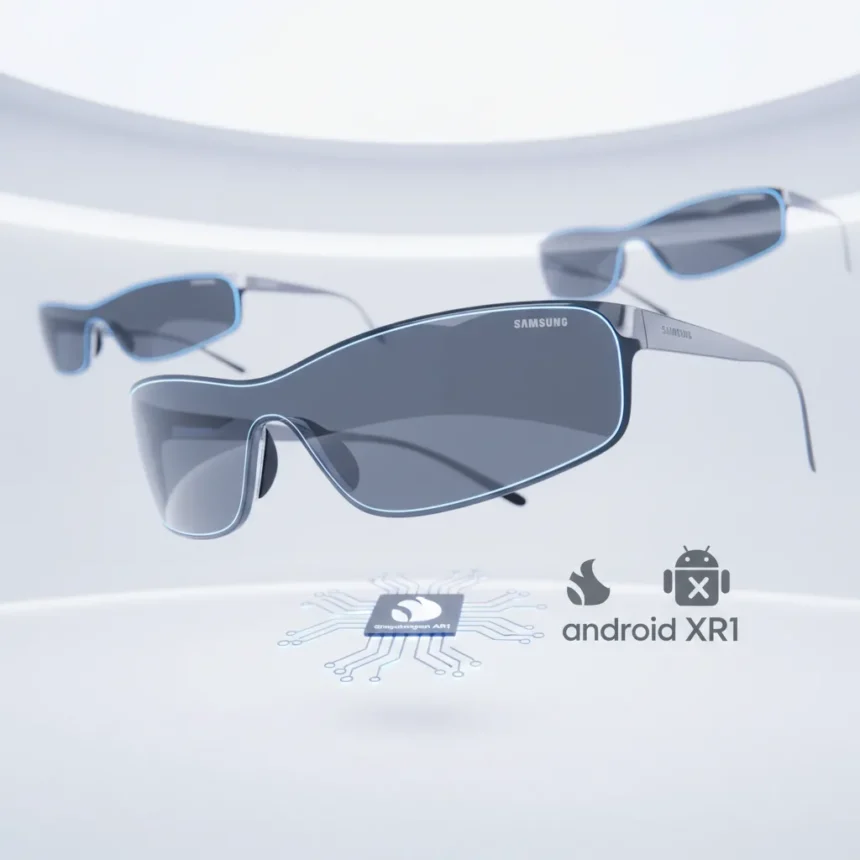
Samsung Galaxy Glasses renders have surfaced online, offering the first detailed look at Samsung’s answer to Ray-Ban Meta glasses. The Samsung Galaxy Glasses are lightweight augmented reality glasses made by Samsung, set to launch in 2026, powered by Snapdragon AR1 processor, and running Android XR operating system. The leaks reveal a device that prioritizes minimalist design over the bulky displays found on competing AR headsets.
Key Takeaways
- Samsung Galaxy Glasses weigh just 50 grams, making them lighter than most current AR glasses
- The 2026 launch variant features a no-display design, relying on AR overlays projected directly onto the wearer’s vision
- Snapdragon AR1 processor powers the device with Android XR as the operating system
- Renders show a sleek, eyeglass-like form factor that resembles Ray-Ban Meta glasses but with distinct Samsung styling
- The device is codenamed Jinju internally at Samsung
What the Samsung Galaxy Glasses renders actually show
The leaked renders depict a frame-based design that abandons the smart display aesthetic entirely. Instead of a visible screen mounted to the frame, the Samsung Galaxy Glasses deliver augmented reality content directly through the lenses via optical projection. This no-display approach is a fundamental departure from how most current AR glasses present information to users. The frames themselves appear minimal and refined, designed to sit on the face like conventional eyeglasses rather than dominating the wearer’s appearance.
The 50-gram weight target makes the Samsung Galaxy Glasses significantly lighter than competing AR devices, addressing one of the primary complaints users have about wearable AR technology. A lighter device means longer wear times without fatigue, which is critical for any glasses meant to be worn throughout the day. The renders suggest Samsung has prioritized comfort and wearability over adding visible technological flourishes to the frame.
Samsung Galaxy Glasses vs Ray-Ban Meta: where the designs diverge
Ray-Ban Meta glasses, which launched earlier, feature a visible camera array and rely on a smartphone connection for processing power. The Samsung Galaxy Glasses take a different approach by integrating the Snapdragon AR1 processor directly into the frame, eliminating the need for a tethered smartphone. This onboard processing capability means the Samsung Galaxy Glasses can function independently, a key architectural advantage over Ray-Ban’s design philosophy.


The visual design language differs too. While Ray-Ban Meta glasses maintain the aesthetic of classic sunglasses, the Samsung Galaxy Glasses renders show a slightly more futuristic but still understated frame design. Both prioritize looking like regular eyeglasses rather than sci-fi headsets, but Samsung’s approach appears to lean toward a sleeker, more minimalist profile. The no-display variant launching in 2026 suggests Samsung is betting on optical projection technology rather than the embedded display screens that some competitors favor.
Android XR and the software experience
Running Android XR sets the Samsung Galaxy Glasses apart from devices locked into proprietary ecosystems. Android XR is designed specifically for spatial computing and AR applications, giving developers a familiar framework to build experiences for the device. This choice signals Samsung’s commitment to an open ecosystem approach, allowing third-party developers to create apps and experiences for the glasses from launch.



The Snapdragon AR1 processor is purpose-built for AR workloads, handling real-time spatial computing, object recognition, and AR rendering without requiring a connection to a smartphone or PC. This self-contained approach means users can interact with augmented reality content directly on the device, whether they are navigating a city, receiving real-time information overlays, or running productivity applications.
When will Samsung Galaxy Glasses actually launch?
Samsung has targeted 2026 for the launch of the Samsung Galaxy Glasses, making this a device still roughly a year away from reaching consumers. That timeline gives Samsung time to refine the optical projection system, optimize battery life, and build out the Android XR app ecosystem. The renders suggest the design is already fairly mature, though final production versions may incorporate refinements based on internal testing.
Are Samsung Galaxy Glasses worth waiting for?
If Samsung delivers on the lightweight, no-display design shown in the renders, the Samsung Galaxy Glasses could set a new standard for AR wearables. A 50-gram device with standalone processing power and optical AR projection addresses real pain points users have with current AR glasses. The main uncertainty is whether the optical projection system will deliver the clarity and field of view users expect, and whether the Android XR ecosystem will have compelling applications ready at launch. The 2026 timeframe gives Samsung a window to get both factors right.
What makes the no-display design significant?
The no-display approach means the Samsung Galaxy Glasses avoid the bulky appearance of AR glasses with visible screens or cameras mounted to the frame. Instead of a protruding display, content appears smoothly within the wearer’s natural field of view through optical projection technology. This design choice prioritizes aesthetics and comfort, making the glasses feel closer to regular eyeglasses than a technical device.


How does the Snapdragon AR1 processor compare to smartphone chips?
The Snapdragon AR1 is optimized specifically for spatial computing and AR tasks, rather than being a general-purpose processor like those in flagship smartphones. This specialization means the chip can handle AR workloads more efficiently, consuming less battery while delivering better performance for augmented reality applications. Smartphone processors prioritize speed across all tasks; the AR1 prioritizes AR-specific performance.
Will Samsung Galaxy Glasses require a smartphone connection?
No. The onboard Snapdragon AR1 processor means the Samsung Galaxy Glasses can operate independently without tethering to a smartphone. This standalone capability is a significant advantage over some competing AR glasses designs, allowing users to interact with AR content anywhere without carrying an additional device.
The Samsung Galaxy Glasses renders paint a picture of where Samsung believes AR wearables should go: lighter, simpler, and more integrated into daily life. If the company can deliver on the promise of optical AR projection and a robust Android XR app ecosystem, the 2026 launch could mark a turning point for AR glasses adoption. The real test will come when the device reaches consumers and proves that the no-display design actually delivers the seamless AR experience Samsung is promising.
This article was written with AI assistance and editorially reviewed.
Source: Tom's Guide