





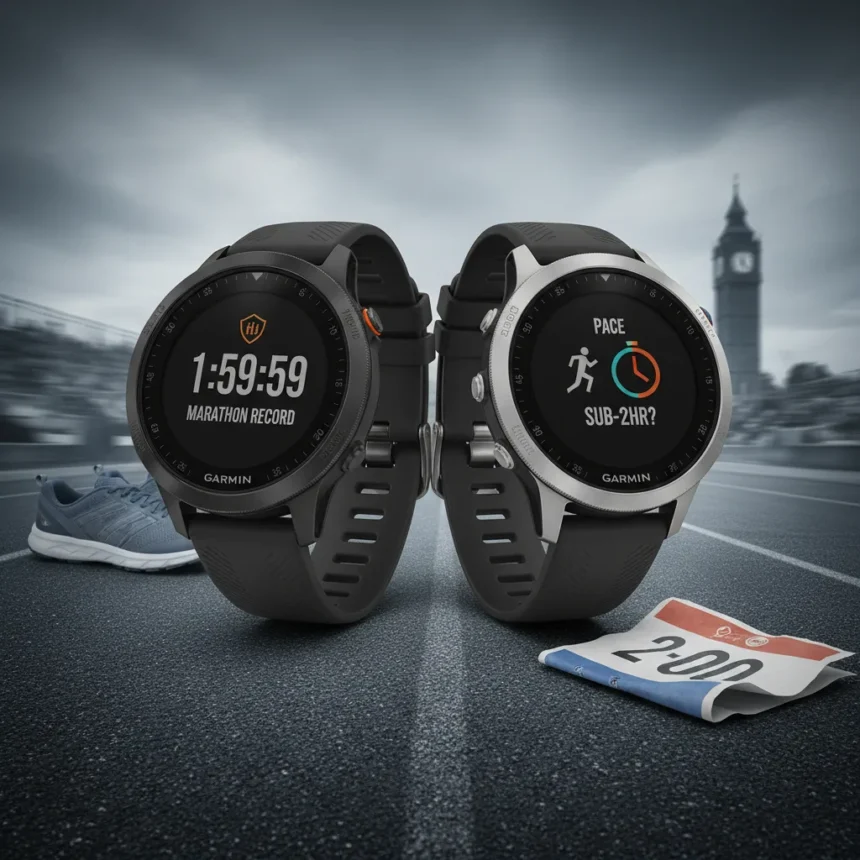
The Garmin Forerunner 70 and 170 represent a strategic refresh of Garmin’s most accessible running watch lineup, announced just as the predecessor Forerunner 55 powered Kenyan runner Sebastian Sawe to break the 2-hour marathon world record. The timing is deliberate—capitalize on the momentum of a historic athletic achievement while introducing modern features that the proven Forerunner 55 lacked.
Key Takeaways
- Forerunner 70 starts at $199.99 with simplified interface and 7-day battery life in smartwatch mode.
- Forerunner 170 adds AMOLED display, music storage, and Garmin Pay at $299.99.
- Both watches feature GPS, heart rate monitoring, and Garmin Coach adaptive training plans.
- Forerunner 55 proved its value in elite running; new models target mass-market accessibility.
- Battery life drops to 18 hours GPS mode on Forerunner 170 despite larger feature set.
Garmin Forerunner 70 and 170: Entry-Level Meets Mid-Tier
The Garmin Forerunner 70 and 170 occupy two distinct rungs on the entry-to-mid-market ladder. The Forerunner 70 is the simplified option—a 42mm watch with a 1.2-inch MIP display, GPS, heart rate monitoring, sleep tracking, and Garmin’s Body Battery energy assessment. It runs for up to 7 days in smartwatch mode or 20 hours when actively recording GPS data. At $199.99, it targets runners who want essential metrics without complexity. The Forerunner 170 doubles down on features: it swaps the MIP screen for a 1.2-inch AMOLED display (390×390 resolution), adds music storage for up to 500 songs, integrates Garmin Pay for contactless payments, and includes advanced training metrics like Training Status and Wrist-based Running Dynamics. The trade-off is battery life—the Forerunner 170 lasts 11 days in smartwatch mode but only 18 hours in GPS mode, 2 hours less than its cheaper sibling. At $299.99, it appeals to runners who value richer data and on-wrist music playback.
Both models weigh 39g and carry a 5 ATM water rating, making them equally durable for training and racing. They share Garmin Coach adaptive training plans, daily suggested workouts, incident detection, and full integration with the Garmin Connect app. The design philosophy is clear: simplify the user experience for newcomers while offering a natural upgrade path for those who want more.
The Forerunner 55 Shadow: Does a World Record Matter?
Sebastian Sawe’s unofficial sub-2-hour marathon using a Forerunner 55 is the elephant in the room. Garmin is explicitly riding this wave—the announcement timing, the marketing narrative, the positioning of these new models as successors to a watch that helped break one of running’s most storied barriers. Yet here’s the uncomfortable truth: Sawe’s achievement does not automatically validate the Forerunner 70 and 170 for everyday runners. A professional athlete with years of training, precise pacing discipline, and ideal race conditions is not the same as someone training for their first half-marathon. The Forerunner 55 succeeded because it delivered accurate GPS and heart rate data; the new models inherit that foundation but add consumer-friendly features like AMOLED screens and music storage that have nothing to do with breaking records.


That said, the Forerunner 55’s role in an elite performance does signal something important: Garmin’s core running engine is reliable. The new watches build on proven technology rather than reinventing it. If you are a serious runner, that pedigree matters more than the marketing story.
Battery Life: The Real Trade-Off
Here is where the Garmin Forerunner 70 and 170 reveal their design priorities. The entry-level Forerunner 70 delivers 20 hours of GPS runtime—enough for most marathon training runs and the race itself. The Forerunner 170, despite being feature-rich, drops to 18 hours. That 2-hour gap is significant for ultramarathoners or runners who train in remote areas where charging is inconvenient. The smartwatch battery life advantage (11 days versus 7 days) matters if you wear the watch daily, but in GPS mode, the Forerunner 170 is the less enduring option. Competitors like the Coros Pace 3 offer comparable battery life at a similar price point, though without music or contactless payments. For runners who prioritize endurance over features, the cheaper Forerunner 70 may be the smarter choice.



Who Should Buy the Garmin Forerunner 70 and 170?
The Forerunner 70 is for runners new to GPS watches or those who want a no-fuss interface. Its simplified design, affordable price, and proven GPS accuracy make it an excellent entry point. If you are training for your first 5K or 10K and do not need music or advanced metrics, this watch will serve you well.
The Forerunner 170 targets runners ready for deeper insights. Training Status tells you whether you are building fitness or fatiguing. Wrist-based Running Dynamics reveal your cadence, ground contact time, and vertical oscillation—data that helps optimize form. Music storage means you can run without your phone. Garmin Pay adds convenience for quick post-run coffee stops. If you log serious miles and want to dial in your training, the extra $100 is justified.
Skip both if you are an iOS-first user; the Apple Watch SE ($249) integrates more smoothly with iPhones, though it lacks Garmin’s running specificity. Ultramarathoners should reconsider the Forerunner 170’s 18-hour GPS limit—the Forerunner 70’s extra 2 hours might matter on a 100-miler.
Pricing and Availability Across Markets
The Garmin Forerunner 70 and 170 launch at competitive price points. In the US, the Forerunner 70 is $199.99 and the Forerunner 170 is $299.99. UK pricing sits at £169.99 and £269.99 respectively, while Australian buyers pay AU$349 and AU$549. Both models are available now from Garmin.com, Amazon, Best Buy, and running specialty stores. Garmin also offers optional HRM chest strap bundles for an additional $50–$80 if you prefer wrist-free heart rate measurement during training.



What About Color Options?
The Forerunner 70 comes in black/slate grey or mist grey/lilac. The Forerunner 170 offers black/slate grey or purple posy. These are not revolutionary design choices, but they provide enough variety for different tastes without overwhelming the product line.
Should you upgrade from the Forerunner 55?
If your Forerunner 55 is still working—and given Sawe’s record, it clearly is—upgrading is optional. The new models add convenience and features, not performance. Upgrade if you want music storage, Garmin Pay, or advanced running dynamics. Stay put if your watch is meeting your needs.
Does the Forerunner 170 battery last long enough for a marathon?
Yes. Eighteen hours of GPS runtime covers a standard marathon with buffer time. For ultramarathons or multi-day training camps, the Forerunner 70’s 20-hour advantage is more useful.
How do these watches compare to Apple Watch for running?
The Apple Watch SE is more versatile for iPhone users and offers better everyday smartwatch features, but the Garmin Forerunner 70 and 170 deliver more granular running data, longer GPS battery life, and training plans specifically designed for runners. Garmin is the specialist; Apple is the generalist.
The Garmin Forerunner 70 and 170 are solid upgrades that balance accessibility with capability. They inherit the reliability that powered a world record while adding features that matter to everyday runners. The real question is not whether they are good watches—they are—but whether you need the upgrade. If you are new to running watches, the Forerunner 70 is a no-brainer entry point. If you are ready for deeper training insights, the Forerunner 170 justifies its price. But do not buy them because Sawe broke a record; buy them because they fit your training needs.
Edited by the All Things Geek team.
Source: TechRadar




