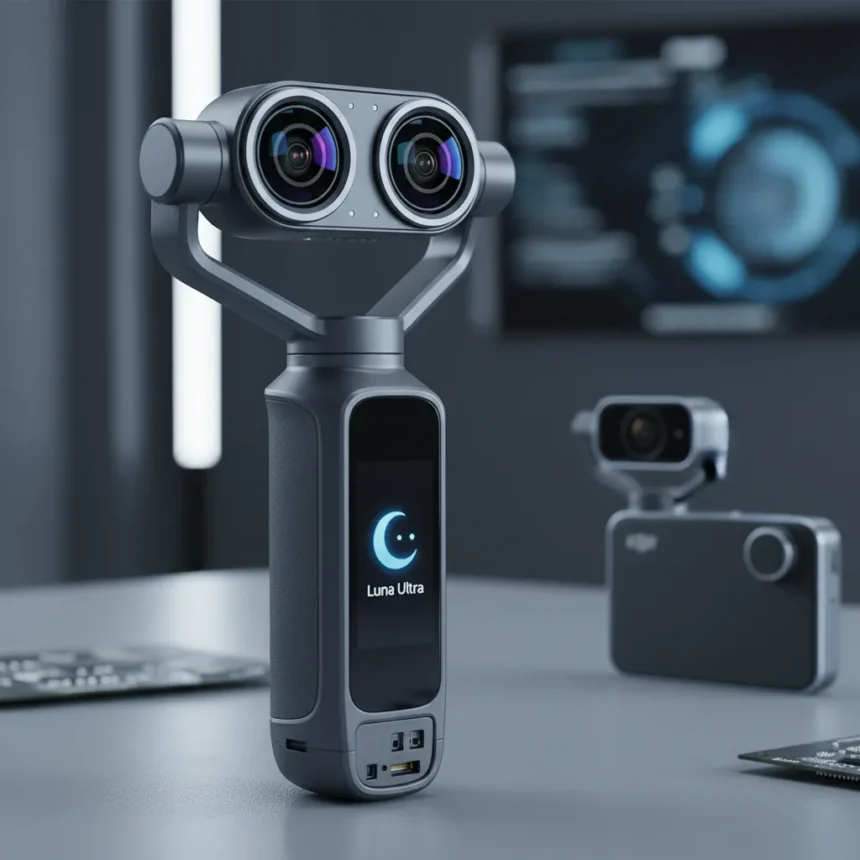
The Insta360 Luna Ultra leaks are painting a picture of a compact, dual-lens gimbal camera that could seriously challenge DJI’s dominance in the portable vlogging space. Multiple sources have surfaced details and images of Insta360’s upcoming Luna product line, revealing a device engineered with Leica and designed around modularity—a feature set that directly targets the weaknesses users have complained about in the DJI Osmo Pocket 4.
Key Takeaways
- Insta360 Luna Ultra features dual cameras mounted on a compact gimbal for stabilized video
- Leica co-engineering suggests premium optical quality in the compact form factor
- Modular design allows users to swap or upgrade components without replacing the entire device
- NAB 2026 is expected to be the official demo venue for the Luna product line
- Positioned directly as a DJI Osmo Pocket 4 competitor in the portable vlogging camera market
Insta360 Luna Ultra Dual-Camera Architecture
The Insta360 Luna Ultra leaks confirm a dual-camera setup mounted on a stabilized gimbal, a departure from single-lens competitors. This architecture gives content creators flexibility—switching between focal lengths without cutting or jumping between takes. The dual-lens approach mirrors professional cinema workflows at a consumer price point, addressing a genuine frustration with the DJI Osmo Pocket 4, which relies on a single fixed lens and digital zoom.
The compact gimbal-mounted design keeps the device pocketable while maintaining the mechanical stabilization that gimbal users prefer over software-only stabilization. Leica’s involvement in the optical engineering signals that Insta360 is prioritizing image quality over raw feature count, a smart positioning against DJI’s spec-sheet approach.
Modular Design Sets Insta360 Luna Ultra Apart
What emerges as the defining feature in the Insta360 Luna Ultra leaks is modularity. Rather than being a sealed, all-in-one unit like the Osmo Pocket 4, the Luna Ultra appears designed so users can swap camera modules, upgrade sensors, or attach different accessories without discarding the gimbal base. This is a genuine innovation for the category—it extends device lifespan and lets creators invest incrementally rather than replacing the entire camera when new optics arrive.

For a vlogging camera market where technology evolves quickly and user needs vary widely, modularity is compelling. Vloggers who want to upgrade sensors in two years can do so without buying a new gimbal. Creators who need specialized lenses for specific shoots can attach them temporarily. The DJI Osmo Pocket 4, by contrast, is a monolithic design with no upgrade path.
How Insta360 Luna Ultra Compares to DJI Osmo Pocket 4
The DJI Osmo Pocket 4 has dominated the portable gimbal camera market through simplicity and ecosystem integration with DJI’s drone ecosystem. But simplicity also means limitations: one lens, one sensor, one design philosophy. The Insta360 Luna Ultra leaks suggest a different strategy—flexibility over integration, modularity over polish.



The Osmo Pocket 4 excels at out-of-the-box ease and seamless DJI app integration. The Luna Ultra, based on available leaks, targets creators who want to customize their setup, swap components, and aren’t locked into a single manufacturer’s ecosystem. Neither approach is inherently superior; they appeal to different user types. Casual vloggers prefer the Osmo Pocket 4’s simplicity. Serious creators who want to grow into their gear prefer the Luna Ultra’s modularity.
When Will Insta360 Luna Ultra Launch?
NAB 2026 is expected to be the official demonstration venue for the Insta360 Luna product line. This timing suggests a launch window in spring 2026, though Insta360 has not confirmed an exact date. The leaks themselves—images and technical details circulating ahead of an official announcement—are typical of the camera industry, where pre-launch rumors build momentum and gather early feedback from the creator community.
Until the official reveal, the Luna Ultra remains in leak territory. Specs, pricing, and final design details are not yet confirmed. What the leaks do confirm is Insta360’s intent to compete directly in a category where DJI has had few challengers.
Does the Insta360 Luna Ultra have a detachable remote?
The available leaks suggest modular design elements, but specific details about a detachable remote control unit have not been independently verified across multiple sources. Insta360’s Luna product line is expected to emphasize modularity, so a detachable remote would fit the design philosophy, but confirmation must await the official announcement.



How does Insta360 Luna Ultra compare in size to the DJI Osmo Pocket 4?
Both devices are designed for portability, but exact dimension comparisons are not yet available from the leaks. The Insta360 Luna Ultra is described as compact and gimbal-mounted, similar in intended use case to the Osmo Pocket 4. Detailed size specs will likely be released at NAB 2026.
Will the Insta360 Luna Ultra work with existing Insta360 accessories?
The modular design of the Insta360 Luna Ultra suggests ecosystem compatibility, but backward compatibility with existing Insta360 accessories has not been confirmed in the leaks. Insta360 will need to clarify which current accessories work with the Luna line and which are new.
The Insta360 Luna Ultra leaks reveal a camera company willing to challenge DJI’s market dominance with a genuinely different approach: modularity, dual optics, and Leica-engineered image quality instead of ecosystem lock-in. Whether creators actually want that trade-off will be answered when NAB 2026 arrives.
Where to Buy
Google Pixel 10 Pro | Samsung Galaxy S26 Ultra
Edited by the All Things Geek team.
Source: TechRadar