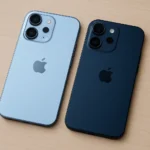





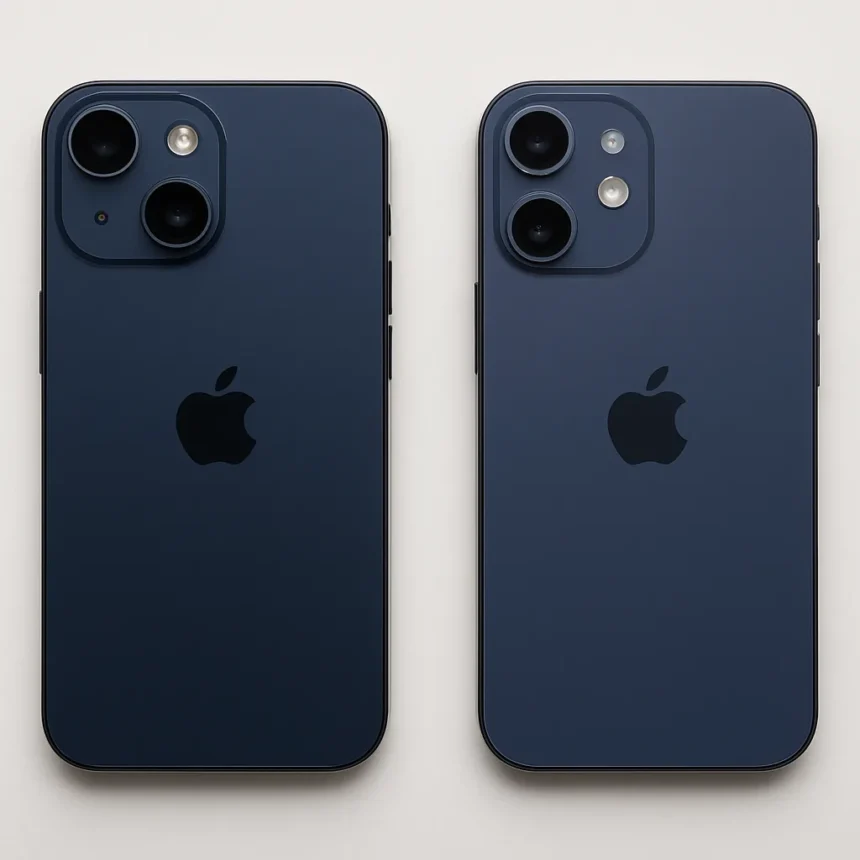
The iPhone 17 vs iPhone 17e decision looks straightforward on paper—one costs less, so it must be the budget pick. But the actual price gap between them is deceptively small, and that changes everything. Once you factor in the hardware differences, the standard iPhone 17 becomes the far more compelling purchase, even if it costs $200 more upfront.
TL;DR: The iPhone 17 costs $200 more than the iPhone 17e ($799 vs $599), but gains a 120Hz OLED display, dual cameras, faster charging, and brighter screen. The spec jump justifies the premium for most buyers, making the iPhone 17 the better value despite its higher price tag.
iPhone 17 vs iPhone 17e: Display and brightness make the difference
Display quality is where the iPhone 17 pulls decisively ahead. The iPhone 17 features a 6.3-inch OLED screen with 120Hz ProMotion, while the iPhone 17e makes do with a 6.1-inch OLED panel locked at 60Hz. That refresh rate gap is immediately noticeable in scrolling, gaming, and everyday navigation—120Hz feels fundamentally smoother than 60Hz, and once you experience it, going back feels jarring.
Brightness separates these phones even more dramatically. The iPhone 17 delivers 3,000 nits of peak brightness, compared to 1,200 nits on the iPhone 17e. That’s a 2.5x difference. Outdoor visibility, HDR content, and even standard photos look sharper and more vibrant on the iPhone 17. For a device you stare at constantly, this matters far more than spec sheets suggest.



The iPhone 17e’s display is competent—it’s OLED, it’s sharp, and it won’t disappoint casual users. But it’s a meaningful step down from what the iPhone 17 delivers. If you spend five hours daily on your phone, that display difference compounds into genuine daily frustration.
Camera hardware: Single versus dual lens tells the real story
The iPhone 17 includes dual 48MP cameras—a wide and ultra-wide lens—while the iPhone 17e relies on a single 48MP sensor. This isn’t a megapixel war; it’s about versatility. The ultra-wide lens on the iPhone 17 lets you capture landscapes, group photos, and architectural shots that the iPhone 17e simply cannot frame. You’re not just paying for a second camera; you’re paying for compositional freedom.



For everyday photography, both phones produce excellent results. The iPhone 17e’s single lens is sharp and detailed. But anyone who shoots frequently—travel, events, creative work—will feel the limitation. You cannot crop your way to an ultra-wide perspective. The iPhone 17 gives you that option built in.
Charging speed and the hidden convenience factor
The iPhone 17 supports 40W wired charging and 25W wireless charging, while the iPhone 17e tops out at 20W wired and 15W wireless. That means the iPhone 17 charges roughly twice as fast. Over a year, this translates to hours of reclaimed time—less time tethered to outlets, more time using your device.
Wireless charging speed matters too. If you use a Qi charger regularly, the iPhone 17’s 25W wireless standard cuts charging time meaningfully compared to the iPhone 17e’s 15W. It’s not revolutionary, but it’s a quality-of-life improvement that compounds.
Battery life: Where the iPhone 17e holds its own
Here’s where the iPhone 17e doesn’t embarrass itself. Real-world battery testing shows the iPhone 17e achieves 12 hours 35 minutes, while the iPhone 17 manages 12 hours 47 minutes. That’s a 12-minute difference—statistically negligible. Both phones will easily last a full day of heavy use, and both will need charging by evening.


Battery life is not the deciding factor here. The iPhone 17’s faster charging compensates for any theoretical battery disadvantage, and both phones perform identically in daily usage patterns.
The $200 question: Is it worth it?
The iPhone 17 costs $200 more than the iPhone 17e. That’s roughly 33 percent more money for what amounts to a significantly more capable device. You’re gaining a 120Hz display, dual cameras, and faster charging—three features that touch your experience every single day.
For most people, the iPhone 17 is the smarter buy. The gap between $599 and $799 is real, but it’s not insurmountable, and the feature gains are substantial. The iPhone 17e makes sense only if you’re extremely budget-conscious or plan to replace your phone within two years anyway. Otherwise, the iPhone 17 delivers better long-term value and satisfaction.
Should I buy the iPhone 17e to save money?
Only if $200 is genuinely unavailable to you. The iPhone 17e is a solid phone with a sharp OLED display and capable single camera. But you’re making meaningful compromises—60Hz feels sluggish, single-lens photography is limiting, and 20W charging is slow by modern standards. If you can stretch to the iPhone 17, you should.
Does the iPhone 17 have better battery life than the iPhone 17e?
Not meaningfully. The iPhone 17 lasts about 12 minutes longer per charge. Both phones will last a full day with moderate to heavy use. The iPhone 17’s faster charging makes it more convenient despite similar battery capacity.
Is the iPhone 17 display noticeably better than the iPhone 17e?
Yes, significantly. The 120Hz refresh rate is immediately apparent in scrolling and gaming, and the 3,000-nit brightness versus 1,200 nits makes a huge difference outdoors and with HDR content. If display quality matters to you, the iPhone 17 is substantially superior.
The iPhone 17 vs iPhone 17e isn’t a close call once you look beyond the price tag. The standard iPhone 17 is the phone most people should buy. Apple has structured these models so that the $200 gap buys you real, daily improvements—not minor tweaks or future-proofing promises. If you’re considering the iPhone 17e purely for cost, reconsider. The iPhone 17 is where the actual value lives.
Where to Buy
Amazon Australia discounting its 256GB variant | Apple iPhone 17 (256GB): | No price information
Edited by the All Things Geek team.
Source: TechRadar