

The Mermaid Mask is the fourth game in SFB Games’ Detective Grimoire series, following Detective Grimoire, Secret of the Swamp, and Tangle Tower, with a demo currently available free on Steam. It centers on a locked-room murder aboard the Mortuga Submarine, where Captain Magnus Mortuga is found dead beside an ancient stone cauldron, surrounded by eight eccentric suspects in pitch-black waters beyond a long-abandoned fishing town. What makes the game technically remarkable is not its premise but its pipeline: SFB Games has figured out how to make 3D interactive clues look indistinguishable from hand-painted watercolor illustrations, and the result is one of the more quietly impressive art-direction decisions in recent indie development.
How The Mermaid Mask Keeps Its 2D Soul With 3D Objects
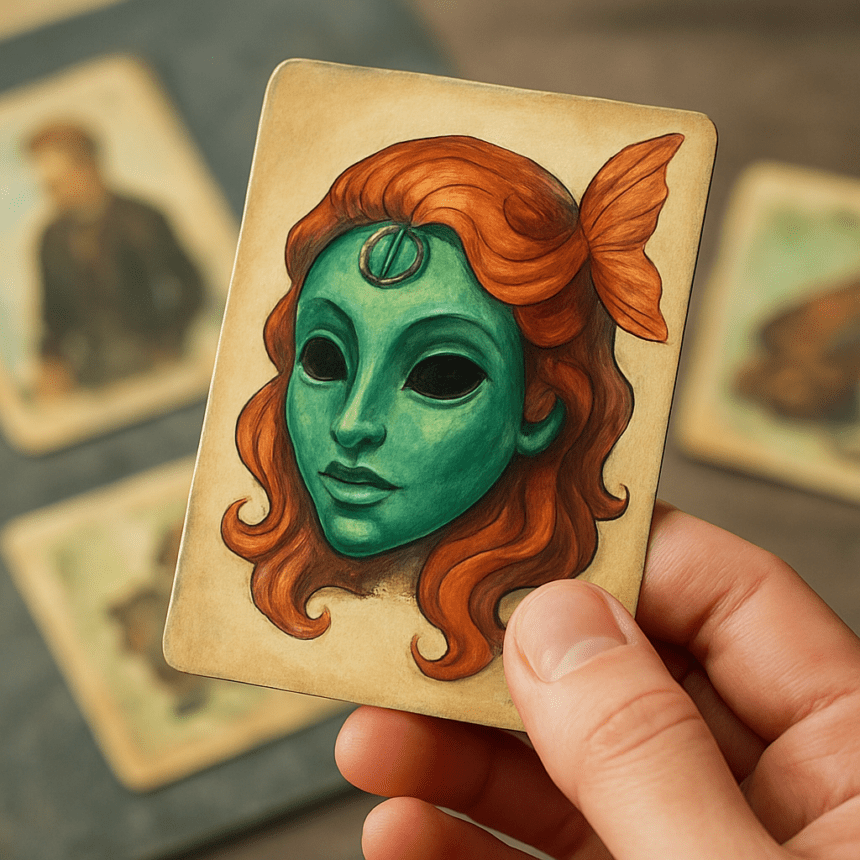
The core tension in The Mermaid Mask’s design is straightforward: the series has always been built on Catherine’s hand-painted watercolor style, and introducing 3D objects risks making clues feel like they belong in a different game entirely. SFB Games solved this through a custom Unity pipeline. Team member Kindra models and textures each clue to match the existing 2D painted aesthetic, while technical director Tom applies a dynamic outline shader that wraps wobbly colored outlines around the edges of each 3D object. As lead developer Vian explained to Creative Bloq, the shader is designed to replicate exactly how Catherine paints outlines in 2D, making the finished object look like a painting even as it rotates in three dimensions. The result is that 3D objects in The Mermaid Mask carry outlines that, by the physics of standard rendering, they should not have at all.
This is not a cosmetic trick applied to a handful of hero items. The clue system in The Mermaid Mask is fully realized: players can rotate objects to inspect every angle, open them, and shake them, with state changes that reveal new information depending on how a clue is handled. The Mortuga Submarine itself, as the central location, required designing all of its sides to hold up under that kind of scrutiny. Vian noted that returning to flat 2D clues after building this system now feels restrictive, which suggests the team considers this a permanent direction rather than a one-off experiment.
What The Mermaid Mask Adds Beyond Its Predecessors
Tangle Tower, the third Detective Grimoire game, built a devoted fanbase that replays it repeatedly, which is a high bar for The Mermaid Mask to clear. The new game maintains full aesthetic continuity with that predecessor — characters remain 2D, the watercolor illustration style is unchanged — while expanding the clue inspection system in ways the earlier games could not support. The locked-room mystery structure also feels more elaborate this time: an impossible murder on a submarine crewed by eight suspects, each presumably with motive and opportunity, is a more constrained and pressure-tested setup than a country house or a swamp.


The production values have also stepped up. The Mermaid Mask features a fully voiced cast and an original soundtrack recorded by the Budapest Art Orchestra. The point-and-click format remains, with the sharp humor and tricky puzzles the series is known for. A trailer released around February 19, 2026 accompanied the Steam Next Fest demo, giving prospective players a hands-on sense of the new clue mechanics before committing to the full release.
The Mermaid Mask and the Craft of Small Improvements
One detail from Vian’s interview with Creative Bloq is worth dwelling on. Discussing character animation, they mentioned going back to redraw Grimoire’s eyes because their ability to render tiny details — like the way eyelids almost close when a character looks down — has improved since Tangle Tower. It is the kind of refinement that most players will never consciously notice, but that accumulates across a game into something that feels more alive than its predecessors. The Mermaid Mask appears to be built on exactly this philosophy: incremental precision applied across every system, from shader art to character expression, until the whole thing coheres.



The game was originally announced under the title The Mermaid’s Tongue, so players searching under that name should note the title change. The full game’s release date and pricing had not been confirmed in available sources at the time of writing.
Is the demo for The Mermaid Mask free to play?
Yes, a demo for The Mermaid Mask is available free on Steam at store.steampowered.com/app/1696770. It gives players direct access to the new 3D clue inspection mechanics before the full game launches.
How does The Mermaid Mask differ from Tangle Tower?
The Mermaid Mask introduces fully rotatable, state-changing 3D clue objects, which Tangle Tower did not feature. Both games share the same hand-painted watercolor art style and point-and-click format, but the new clue system represents a meaningful expansion of how players interact with evidence.
Who makes The Mermaid Mask?
The Mermaid Mask is developed by SFB Games. Key team members include Vian as lead, Kindra handling texture painting and modeling, and Tom serving as technical director responsible for the custom shader work that makes 3D clues look hand-painted.



The Mermaid Mask is making a genuinely interesting argument: that 3D and 2D are not opposites in game design but complementary tools, provided the technical work is precise enough to hold the illusion together. SFB Games has built a pipeline that proves the point, and if the full game delivers on the promise of its demo, this may be the entry that finally pulls the Detective Grimoire series into the mainstream conversation it has long deserved.
Edited by the All Things Geek team.
Source: Creativebloq